Trend Focus
addtimes:2026-05-23 click:3504 author:Gimsun
As we stroll through luxury shopping malls in the spring and summer of 2026, something significant is shifting — fewer mannequins in the windows, lighter props, and backgrounds that let you see right through. Those installations that once bombarded the eye with gilded mirrors, giant sculptures, and high-saturation color clashes are giving way to spaces that feel quieter, more transparent, and far more captivating in the long run.
This isn't just a simple aesthetic evolution. It's a structural transformation driven by changing consumer sentiment, upgraded brand strategies, and the maturation of digital technology.
This article breaks down the four core trends of Brand Retail Window Displays in 2026, drawing on seasonal materials and craftsmanship case studies from dozens of leading brands across six major categories — luxury, affordable luxury, beauty, jewelry & watches, sportswear, and collectible toys. It offers the industry a deep report that blends trend insights with practical reference.
Keywords: negative space, shifted center of gravity, simplified props
Application:
- Mannequins reduced to one to three per window
- Off-center poses (sideways, slightly seated, glancing back) to create a non-salesy feel
- Both the number and scale of props reduced, backgrounds drastically simplified
Core insight: When consumers are bombarded with thousands of messages every day, "less" is no longer an aesthetic choice — it's a commercial necessity. The essence of relaxed minimalism is returning the product to the narrative center, letting the consumer's eye complete information extraction within three seconds.
Keywords: breathability, raw wood, rattan, rough stone, floral installations
Application:
- Raw wood, rattan, and rough stone form the foundation
- Greenery and floral arrangements serve as narrative elements
- Windows evolve from display platforms into micro-landscapes
Core insight: Modern consumers care about wellness. The outdoor craze has evolved from a lifestyle choice into a brand value proposition. People no longer just want to see the product — they want to feel the lifestyle the brand stands for.
Keywords: eco-first, recycled boards, plant-based dyes, zero-waste props
Application:
- Recycled boards replace virgin timber
- Matte recyclable metals replace plated metals
- Paper and plant-dyed fabrics replace synthetic materials
Core insight: When sustainable materials become the default choice for window displays, the competition shifts from "whether to use them" to "how well you use them" — finding a real and compelling balance between cost, aesthetics, and responsibility. Environmentalism has become a shared value between brands and consumers, not a one-way self-promotion.
Keywords: blending virtual and real, LED screens, 3D printing, water ripple projections
Application:
- LED screens replace traditional background installations
- 3D printing replaces custom-molded metal parts
- Water ripple projections create the illusion of depth
Core insight: A single LED screen's content can be reused across multiple seasons, while a custom-built physical installation typically lasts just one. Light digital intervention is fundamentally about shifting the cost structure from "hardware-driven" to "software-driven" — replacing rigid physical resources with more flexible digital ones.
In 2026, brand window displays revolve around three directions of material texture. These directions don't exist in isolation — great windows often blend natural warmth, airy lightness, and sustainable values all within the same space.
Natural texture: matte raw wood, rattan, rough stone and textured stone, linen and cotton — these materials create breathability, giving the window a living quality.
Light and airy: semi-transparent organza, specialty paper, frosted acrylic, gradient glass, semi-transparent films — these materials bring a suspended lightness and transparency, letting the gaze flow through unobstructed.
Sustainable: recycled boards, matte recyclable metals, paper, plant-dyed fabrics — these materials respond to consumers' expectations of brand responsibility with understated environmental grace.
Hermès uses canvas with UV-printed panels as background, paired with matte metal fixtures, fiberglass three-dimensional forms, and uniquely shaped luminous bodies with surface UV printing, preserving the warmth of hand craftsmanship within minimalism.
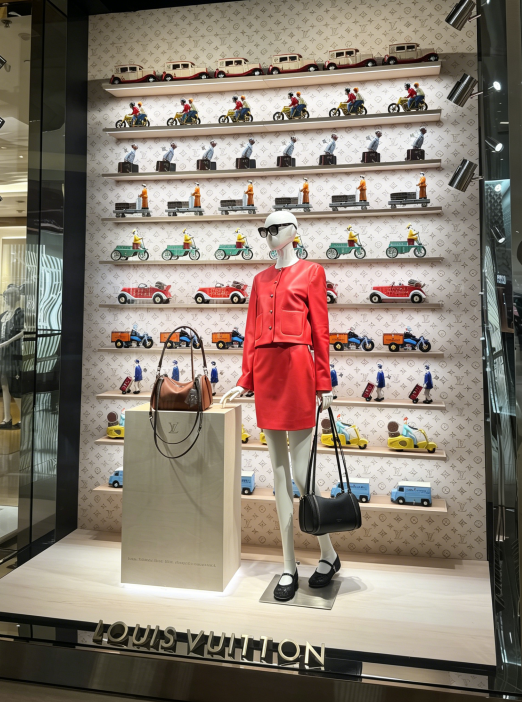
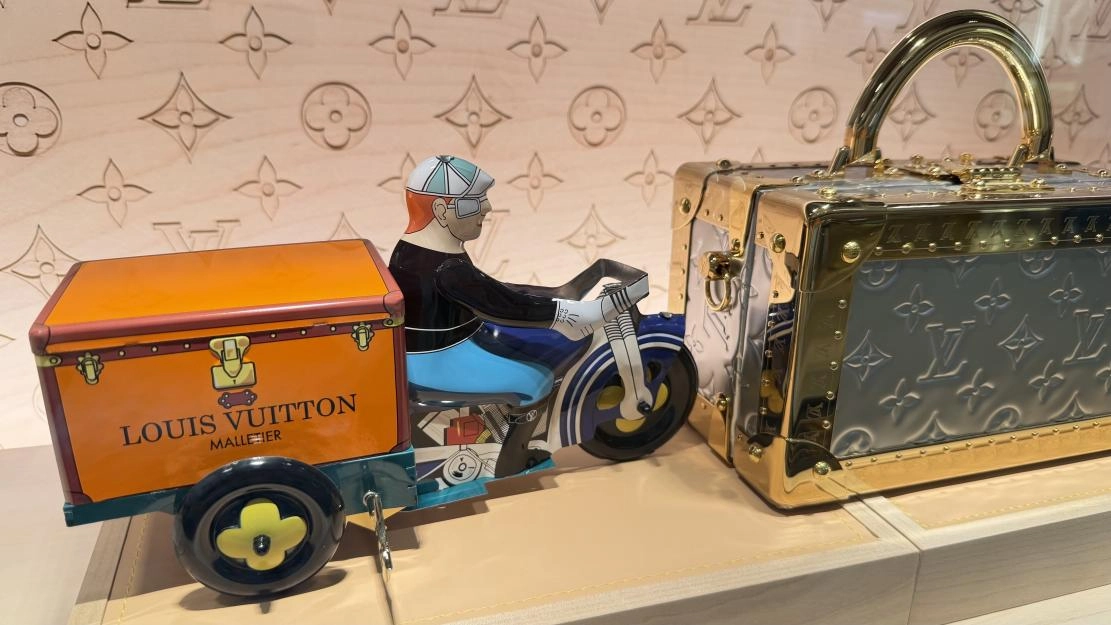
Louis Vuitton employs carved raw wood paneling with small custom decorative pieces, leaning toward custom-molded metal shaping, injecting the precision of digital carving into traditional craftsmanship.
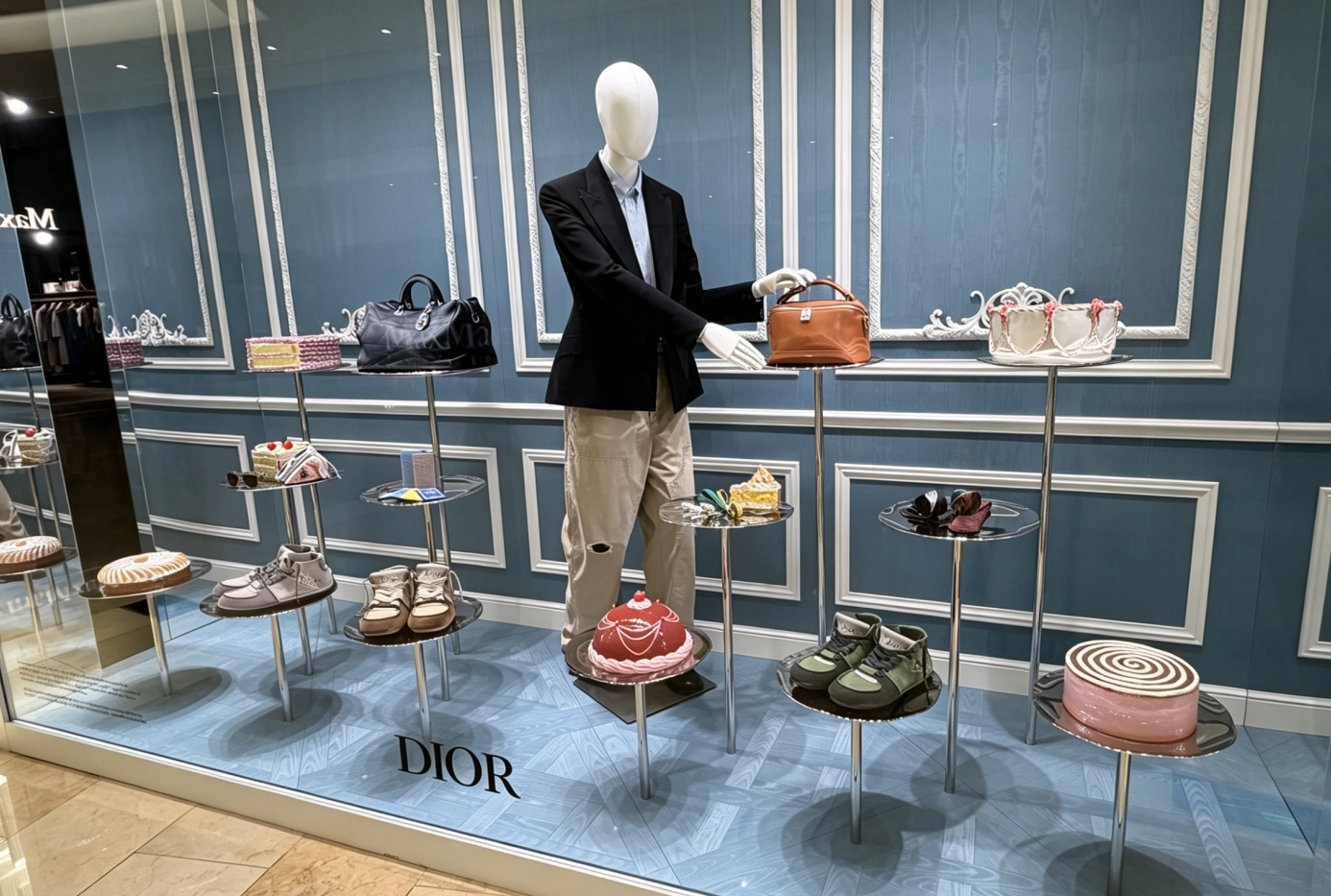
Dior combines painted wood paneling with European-style wooden molding, glossy stainless steel brackets supporting custom replica cakes — natural materials to control costs, selective metal for refinement.
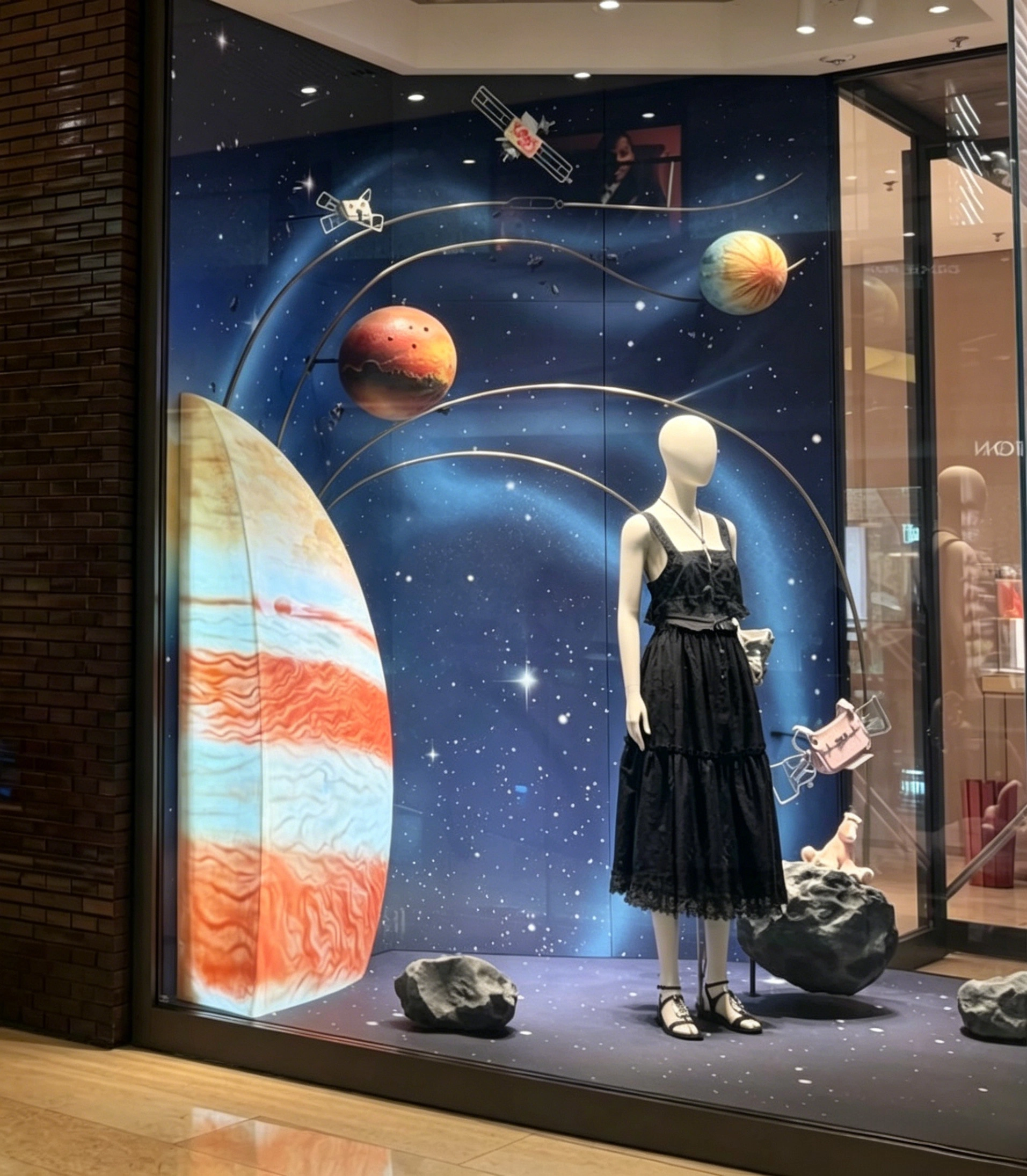
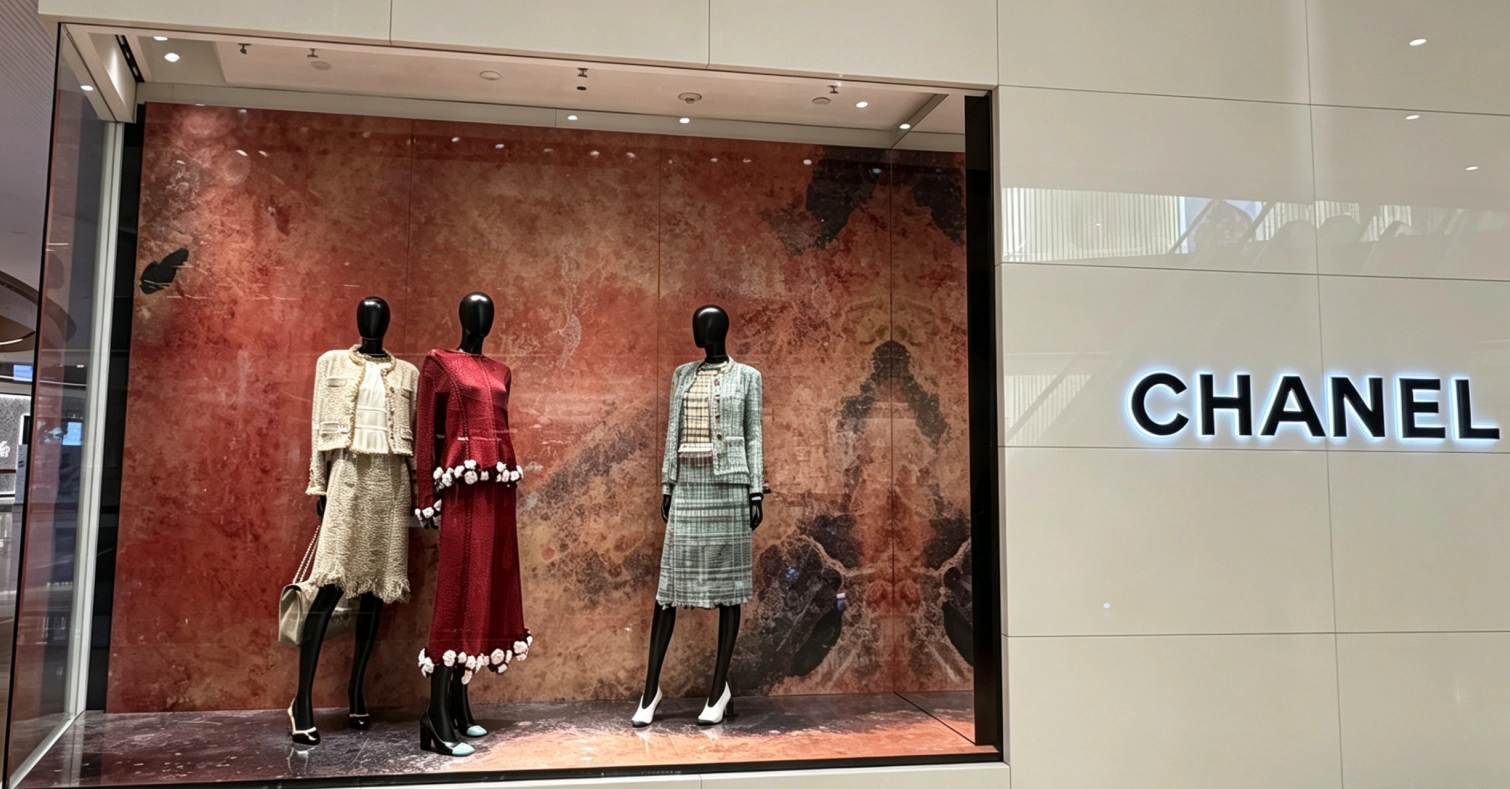
Chanel presents UV-printed planetary surface patterns on glass or ceramic tile, with matching display columns — one column, one world — focusing hardware investment on the precision of individual props.
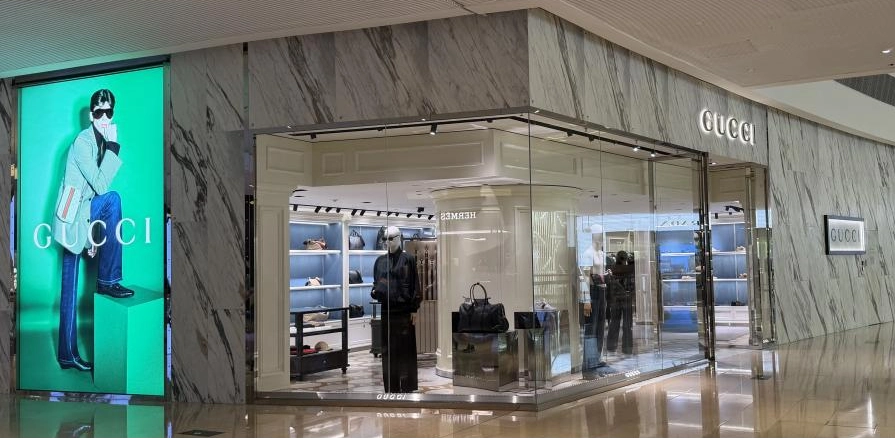
Gucci goes all the way to the extreme — no background at all, telling the story solely through irregular mirrored steel display columns. Zero waste, zero decoration.
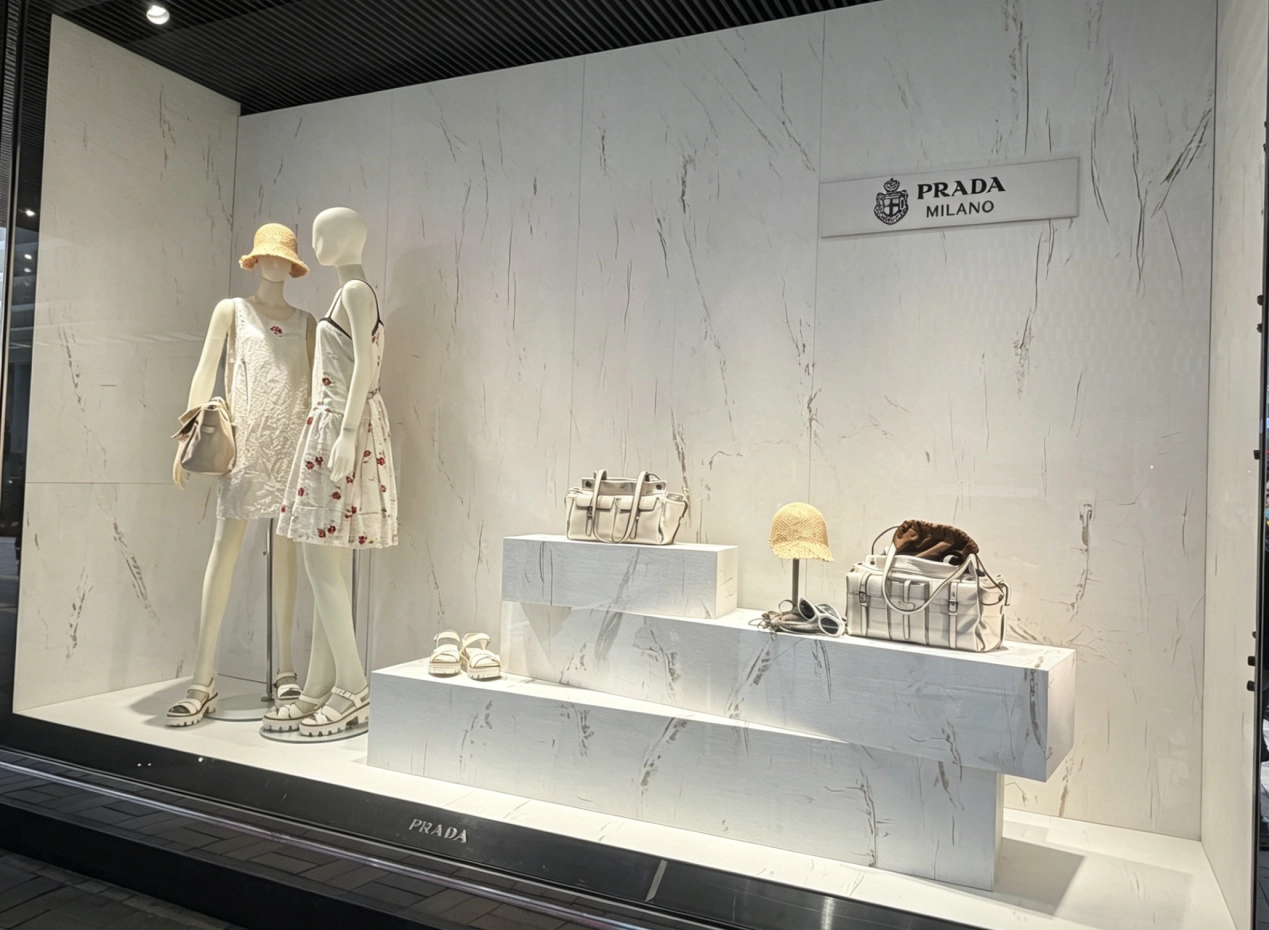
PRADA uses canvas UV-printed cladding over panels and square columns, replacing plastic with biodegradable materials — reducing replacement frequency while honoring sustainability commitments.
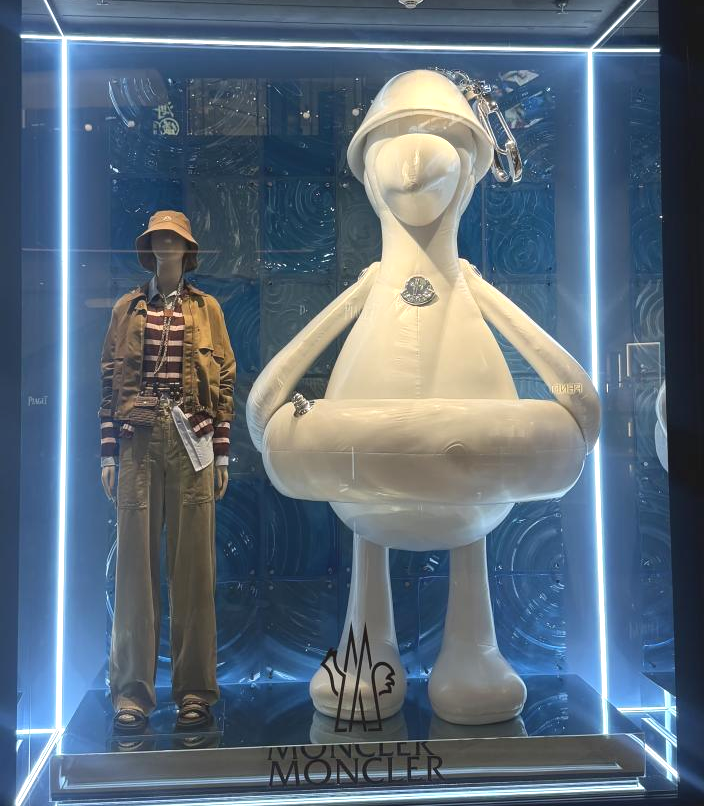
Moncler uses translucent blue ripple glass or acrylic as background, with large three-dimensional leather-plush figures filled with cotton, turning "light and soft touch" into a visually striking narrative.
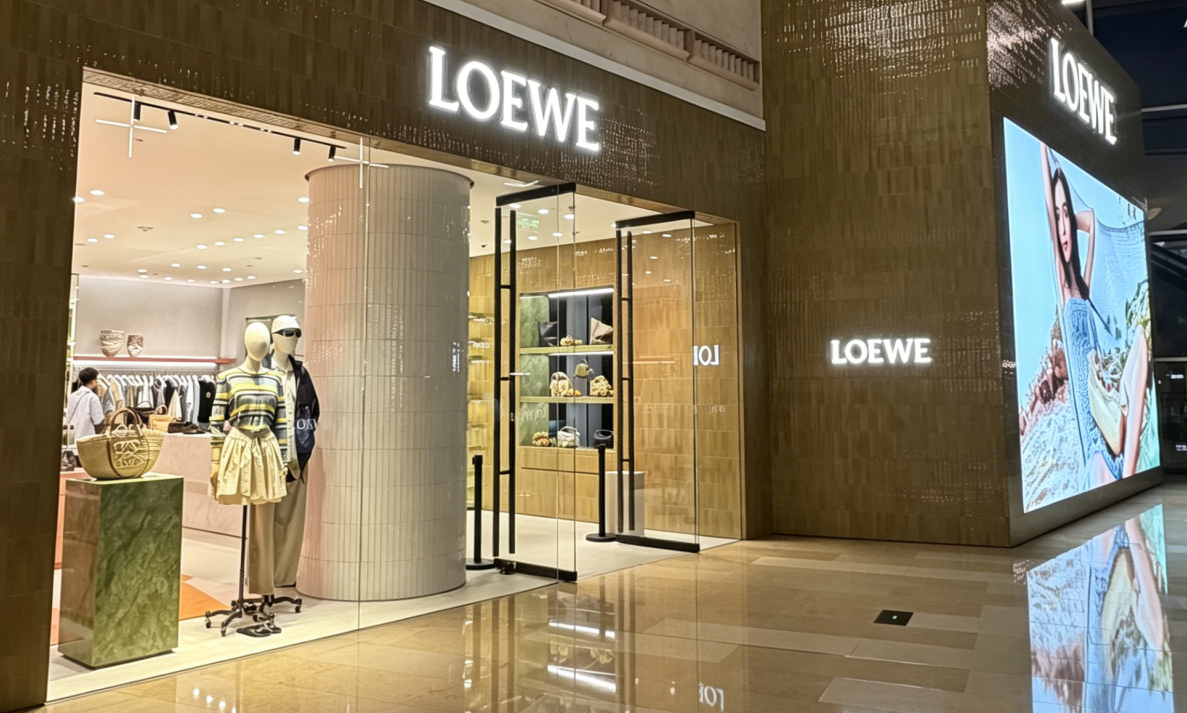
LOEWE strips away all background — a large fabric light box on the exterior wall paired with a single stone-textured display column. The prop itself becomes the only content. Material tells the story through minimalism.
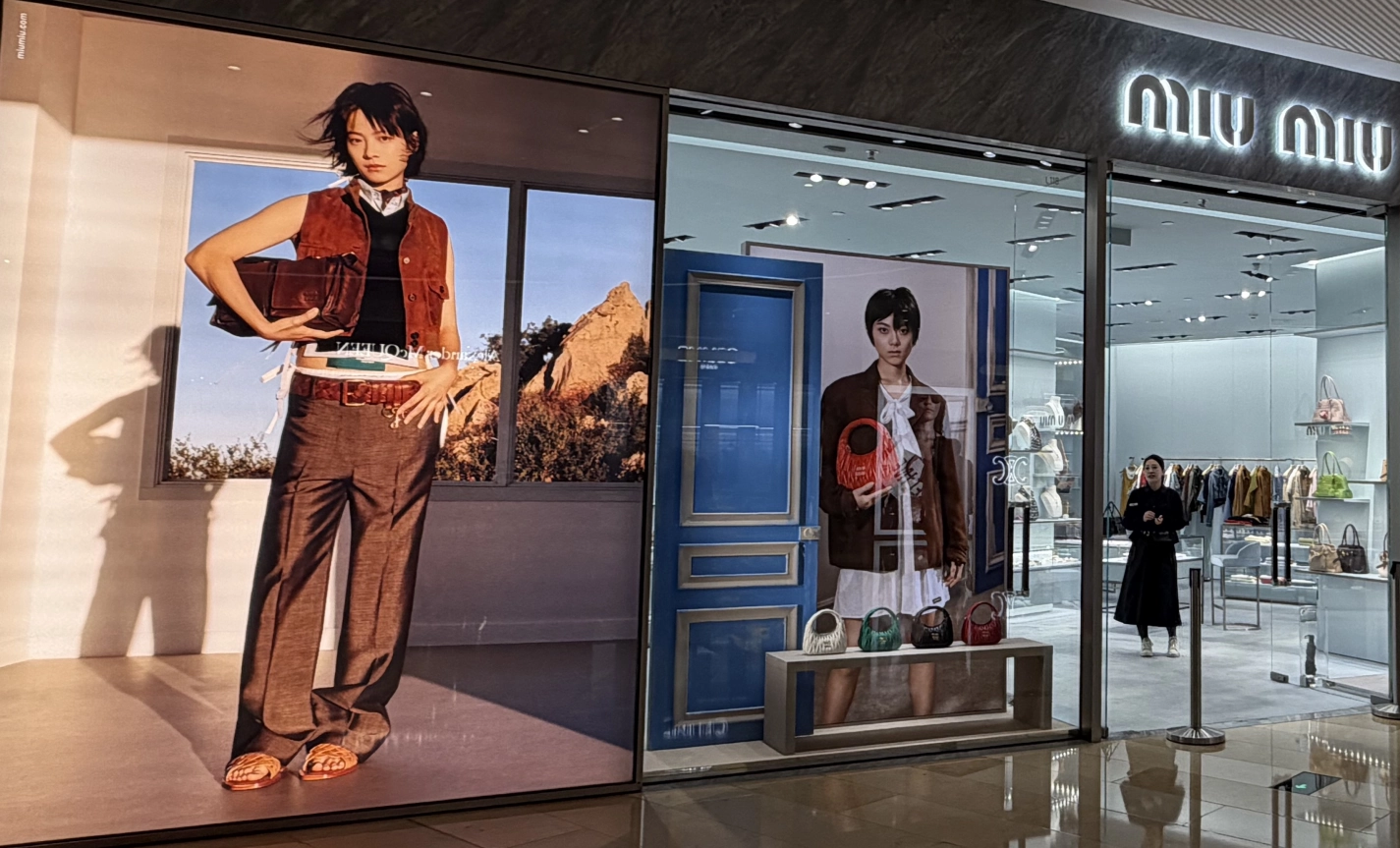
Miu Miu uses a large fabric light box, wooden door frames plus picture frames as background, with natural-toned square frames and geometric display plinths forming a cohesive whole — the wood frames can be adjusted across seasons.
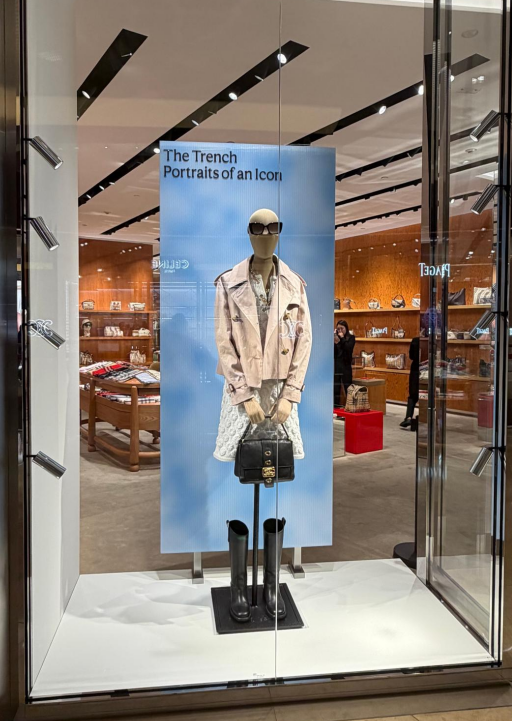
Burberry takes minimalism to its limits — polycarbonate panels paired with framed light boxes. Only mannequins, no props. The mannequin is everything.
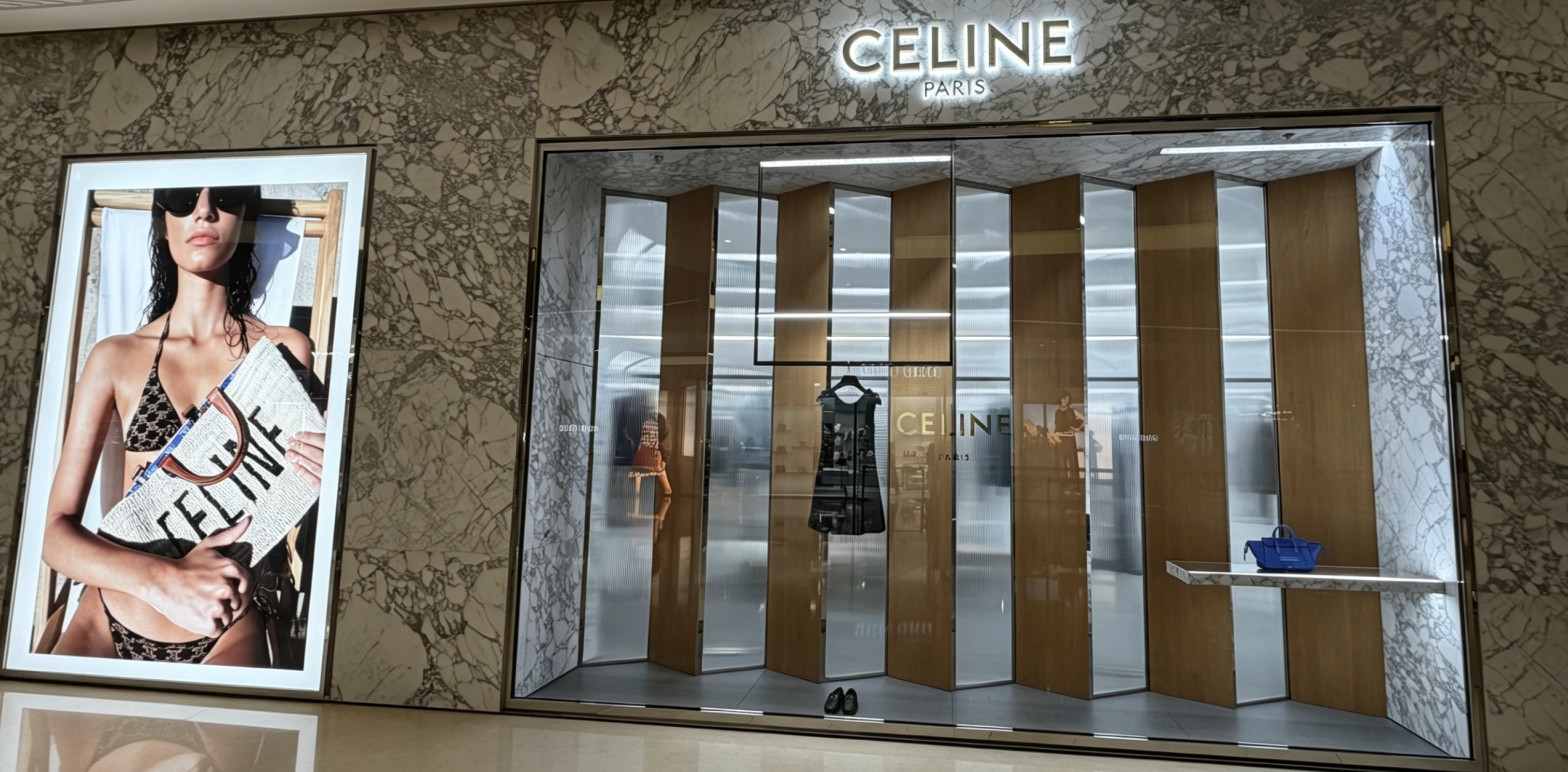
CELINE builds backgrounds from metal, wood, and glass screens, with minimalist metal hanging rods paired with stone-textured shelves — a multi-material mix that elevates display distinctiveness.
Longchamp uses painted backdrops, a tiny wood-grain cabin, cylindrical display plinths, and hay to create an entirely natural prop scene — zero chemical coatings.
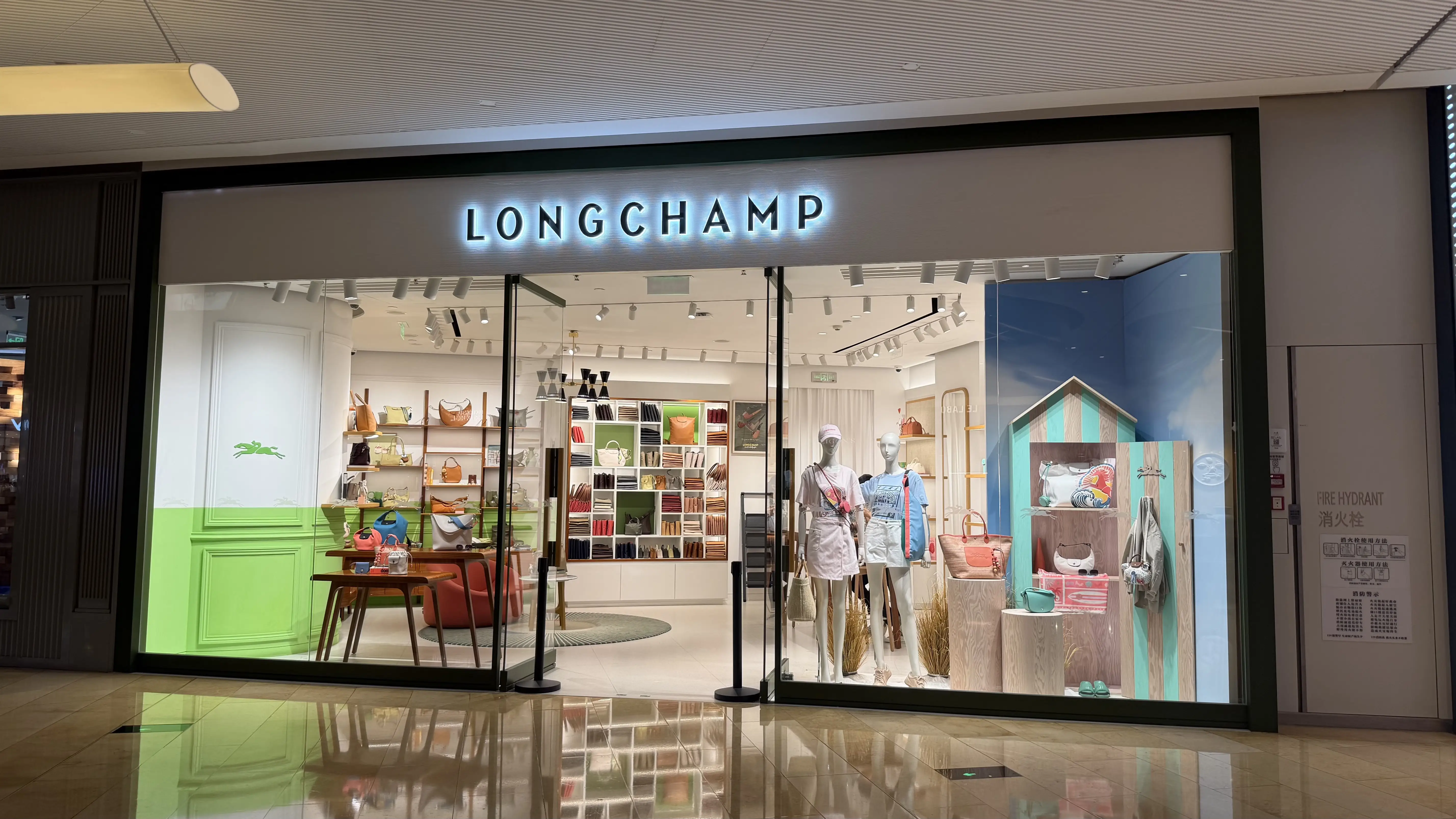
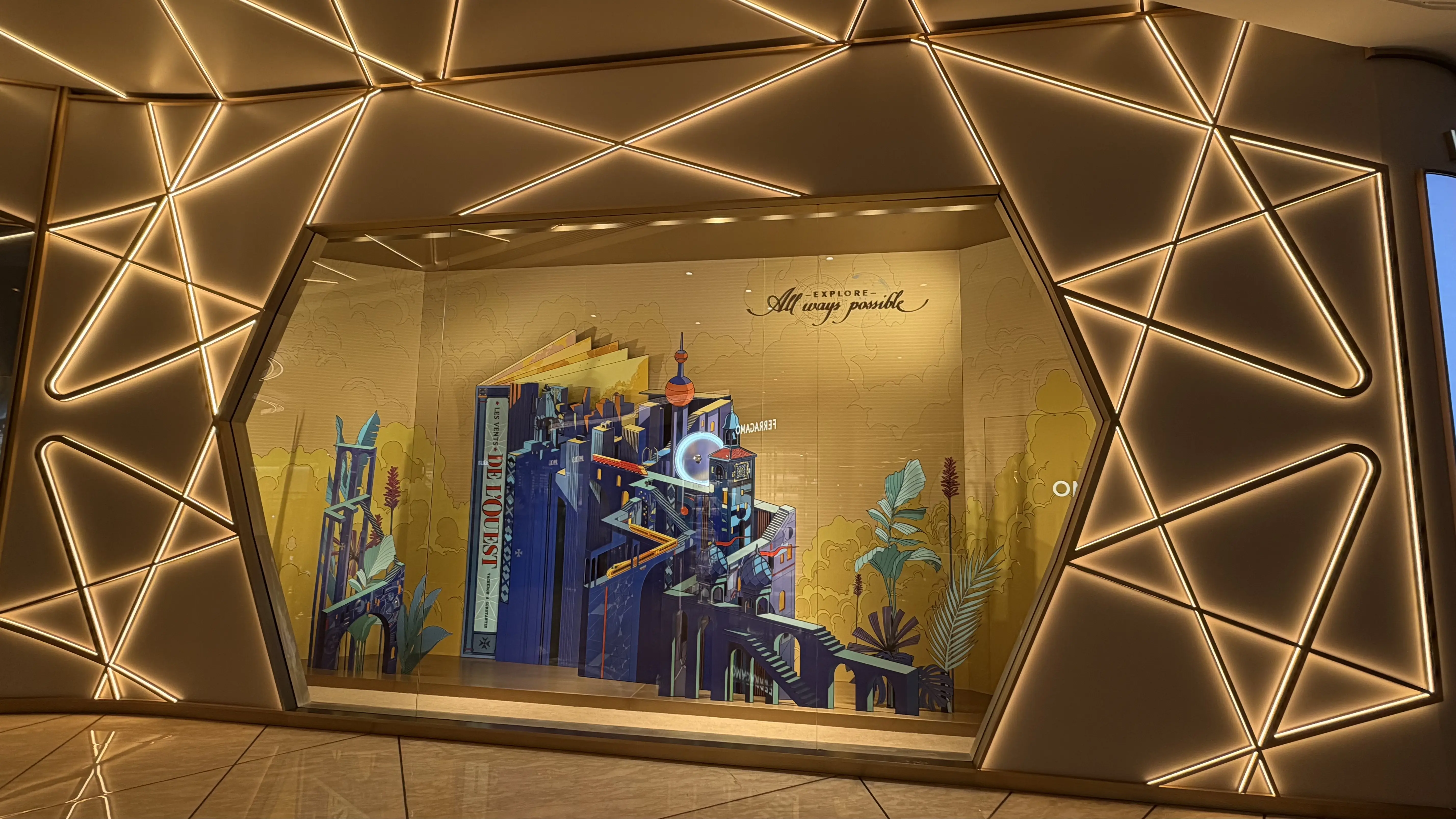
Ferragamo creates strong visual impact with a fluorescent yellow accent wall, using stone-textured and brushed stainless steel display columns as standalone props to focus attention, replacing device stacking with color.
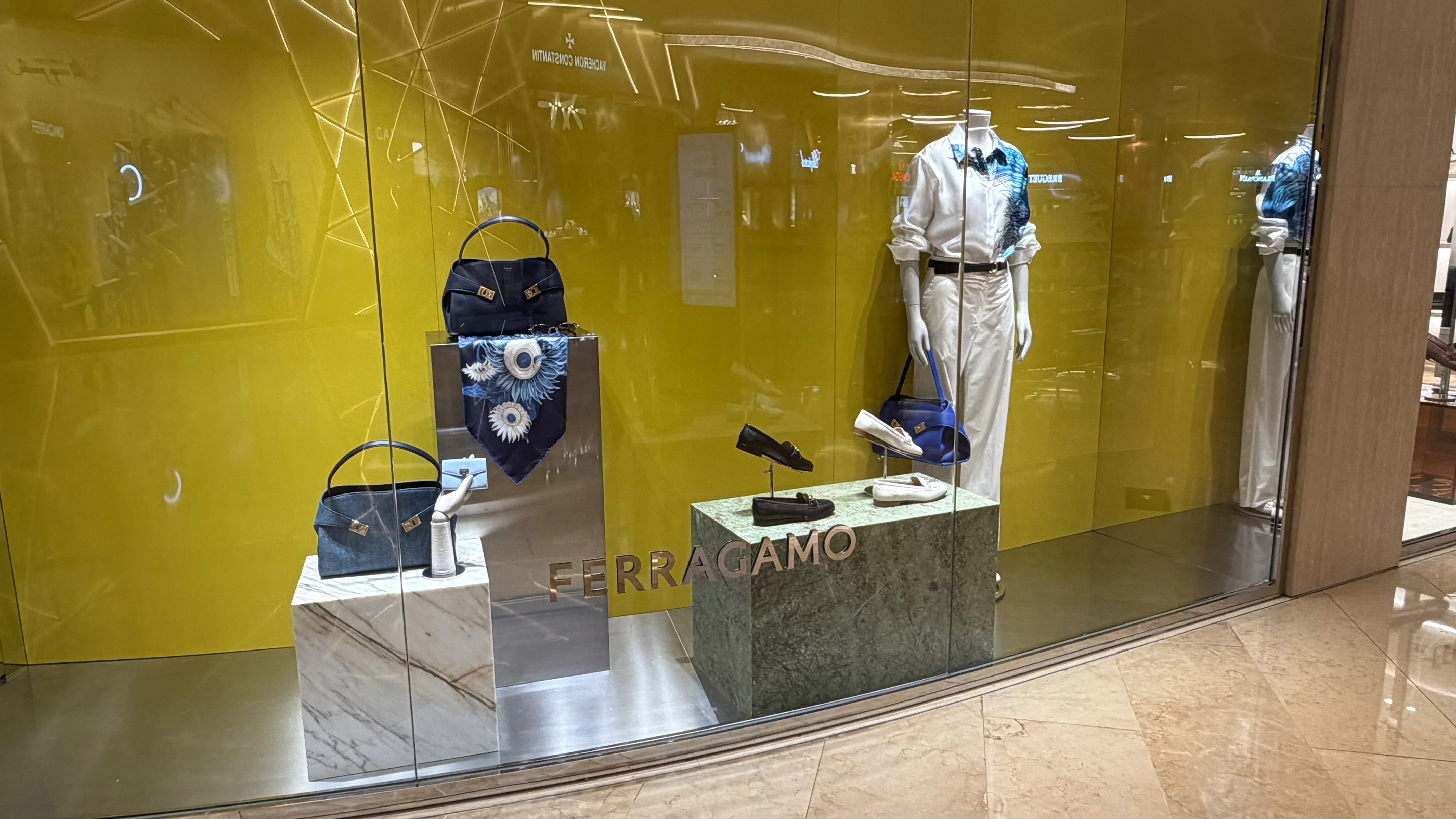
Beauty is the category where light digital intervention is most widely adopted. Every beauty brand's storefront advertising features high-definition LED screens with frameless light boxes — LED screens have replaced nearly all background installations.
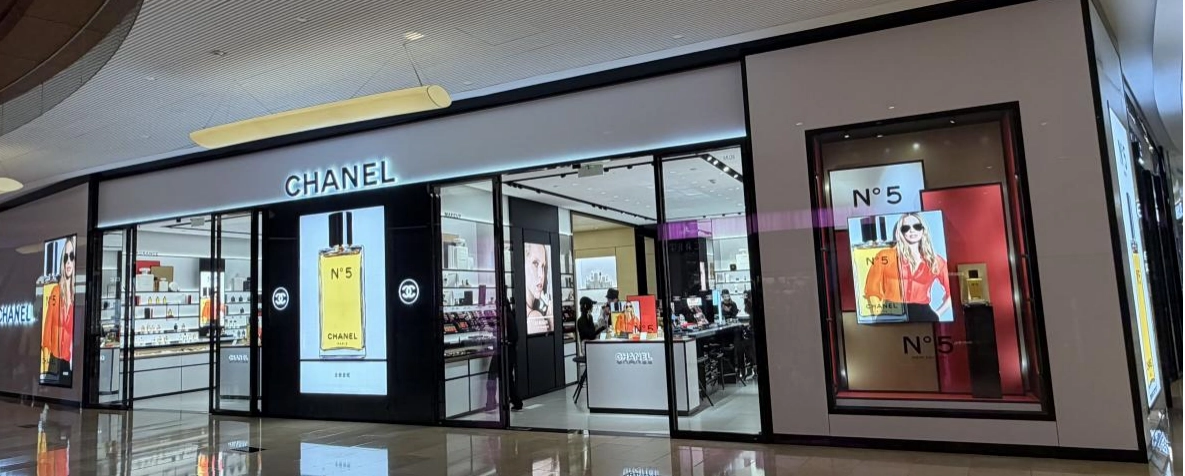
Display plinths are primarily acrylic, painted wood, or a mix of acrylic with metal and painted wood. Props are simplified to the extreme; the product itself is the absolute star.
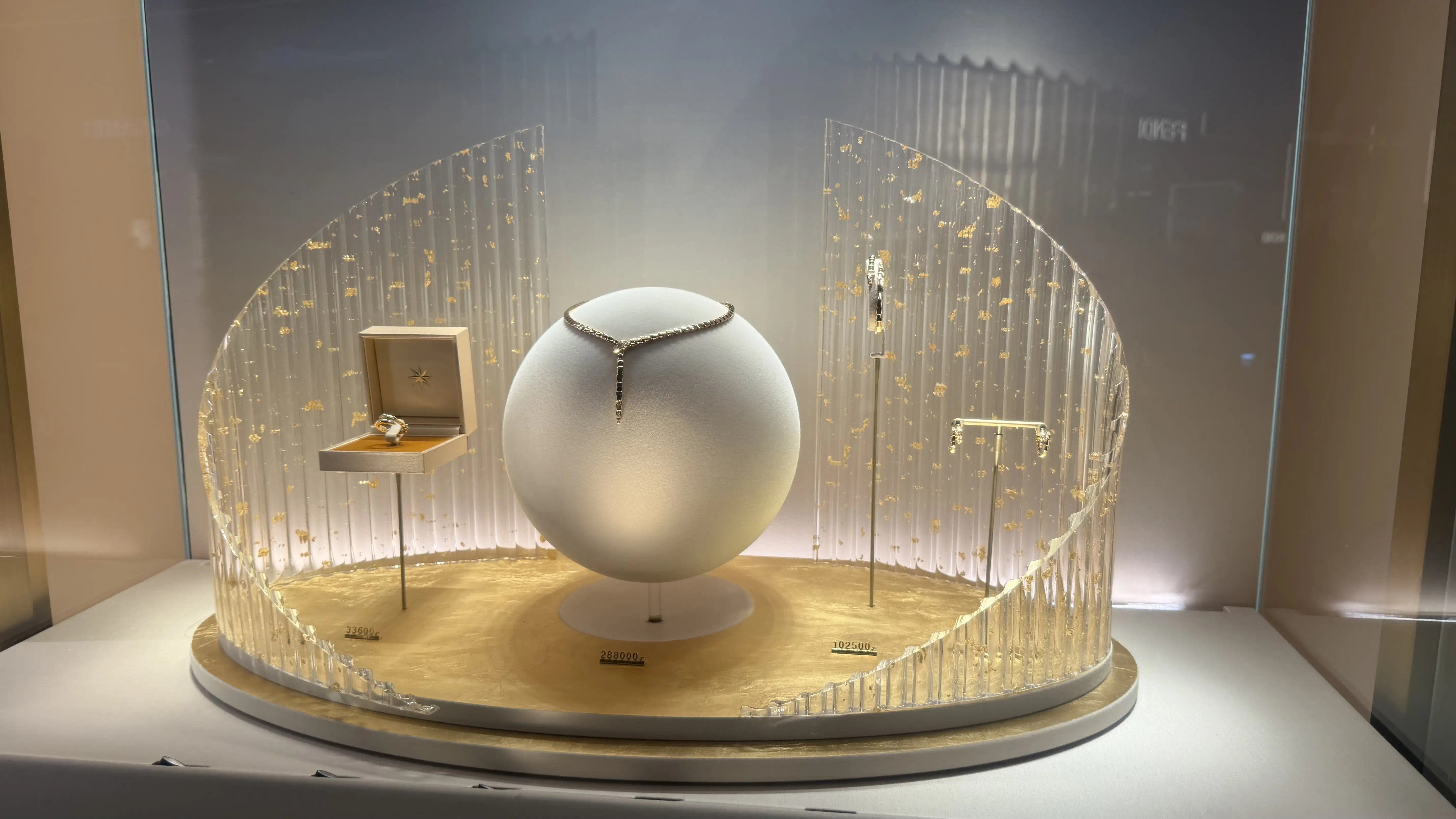
BVLGARI draws inspiration from ancient Roman walls — vertical textured acrylic paired with gold leaf, refracting light to echo gold craftsmanship. The overall effect is transparent and airy.
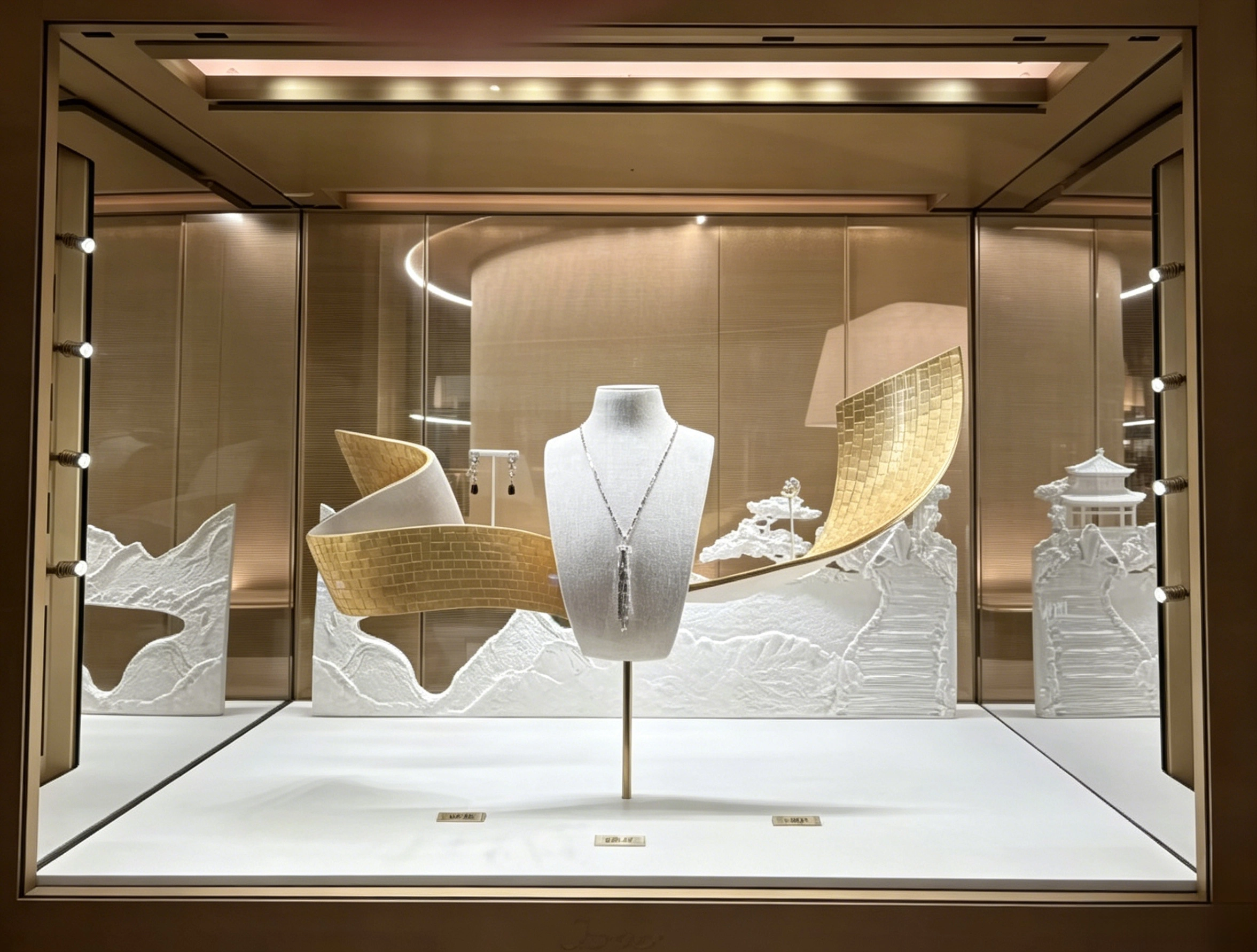
Cartier uses platinum-toned 3D-printed architectural forms as background — pure, minimalist, maximizing the sparkle of the jewelry.
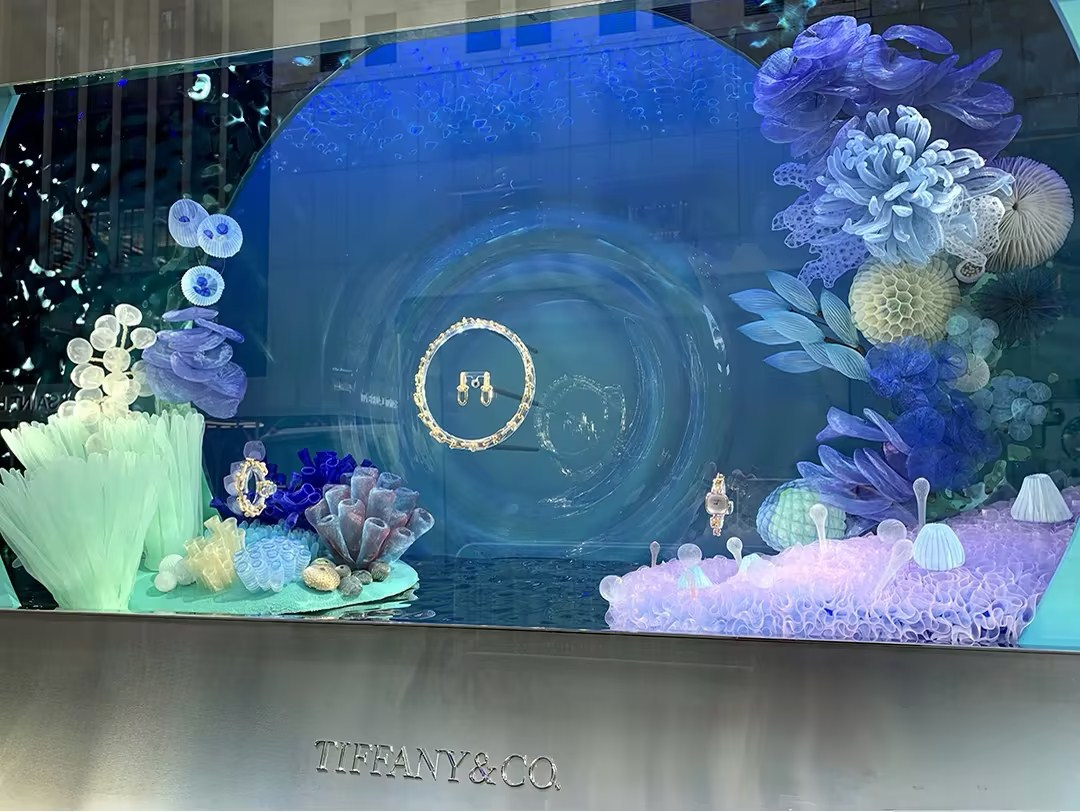
Tiffany & Co. presents coral and seaweed through gauze and fabric forms. The background and floor feature wave-patterned metal to create an underwater environment. The back wall uses a translucent resin-like material, together building a soft, cool, and transparent underwater world.
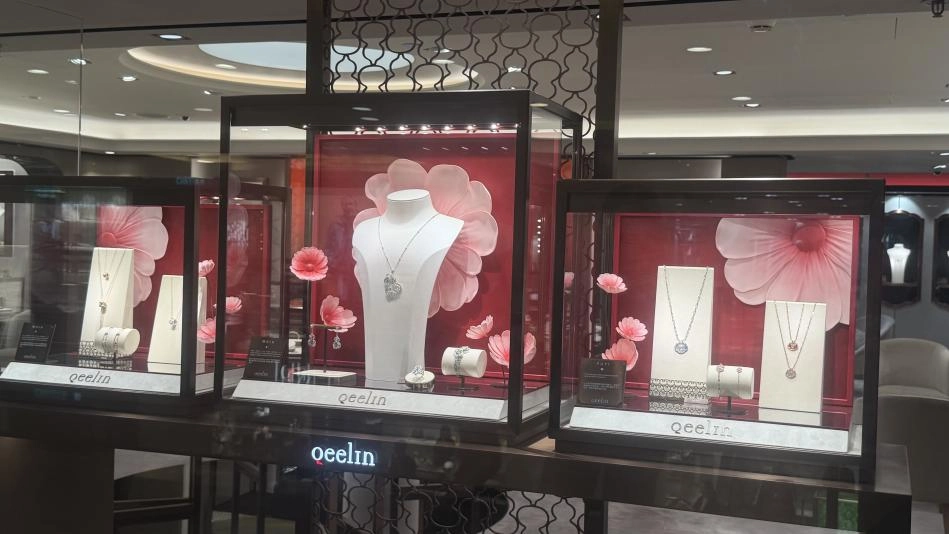
Qeelin continues its iconic red background, paired with fabric-formed flowers — color and craftsmanship creating strong brand recall.
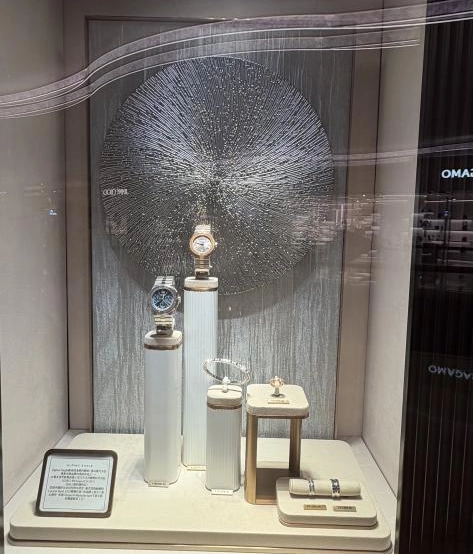
The core language of the jewelry and watch category is material mixing — raw wood with black steel, marble with brass, textured acrylic with gold leaf. 3D printing and UV printing efficiently produce small batches of high-precision props, giving light digital intervention new room to play.
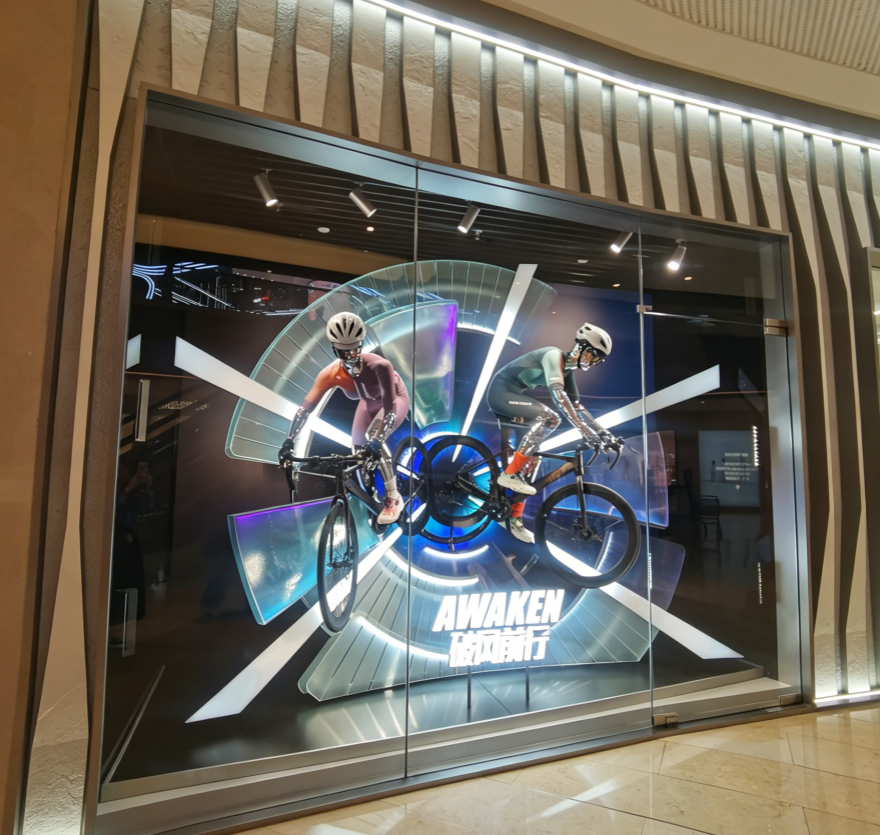
DESCENTE uses semi-transparent frosted iridescent acrylic paired with LED as a large background installation, with one-on-one dynamic mannequins accompanying bicycles. Metal luminous lettering runs throughout, creating an overall sense of motion and technology.
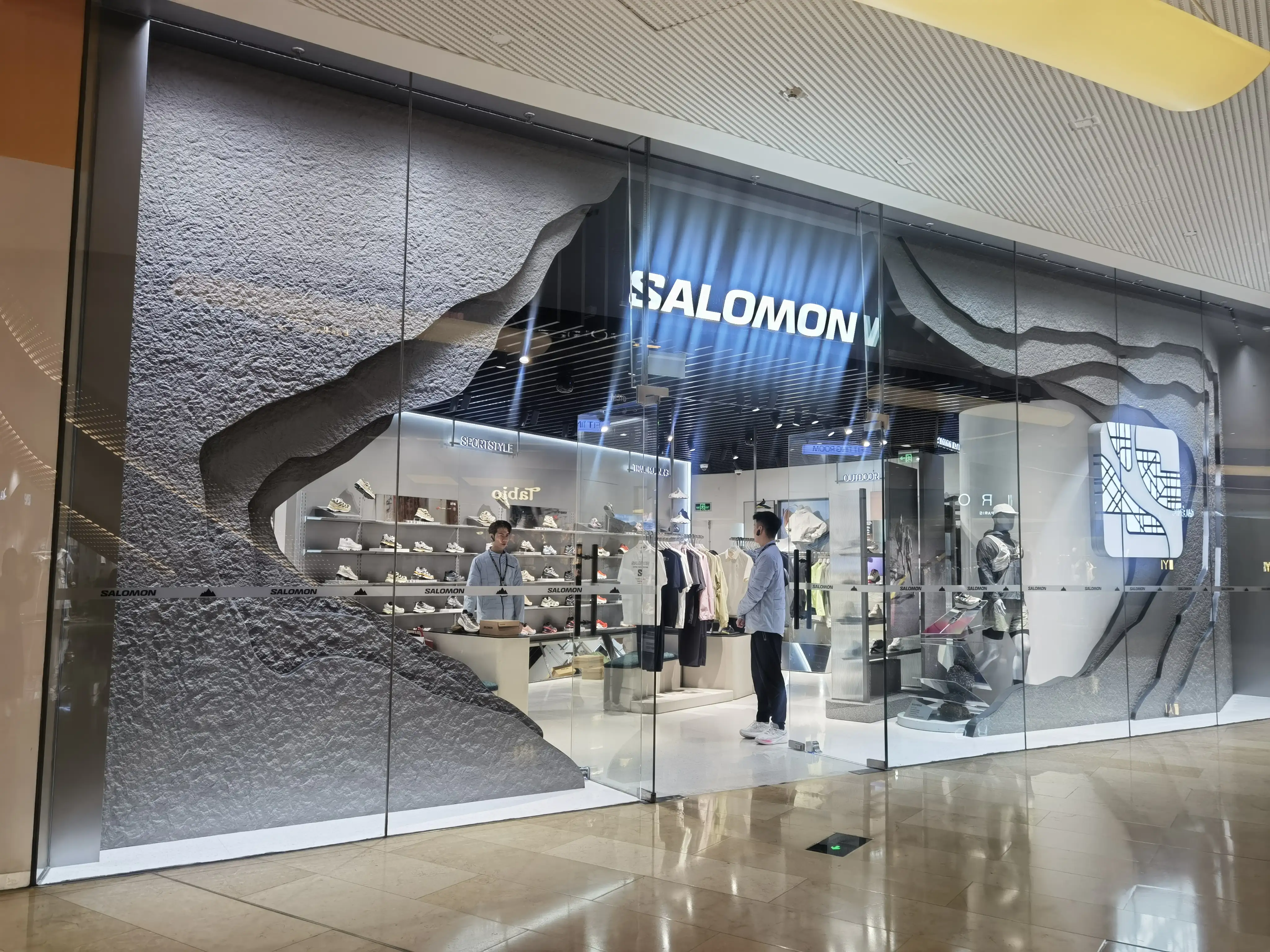
SALOMON uses its storefront itself as the window display — faux-stone surface panels creating a mountain scene. The facade is the installation — two birds with one stone.
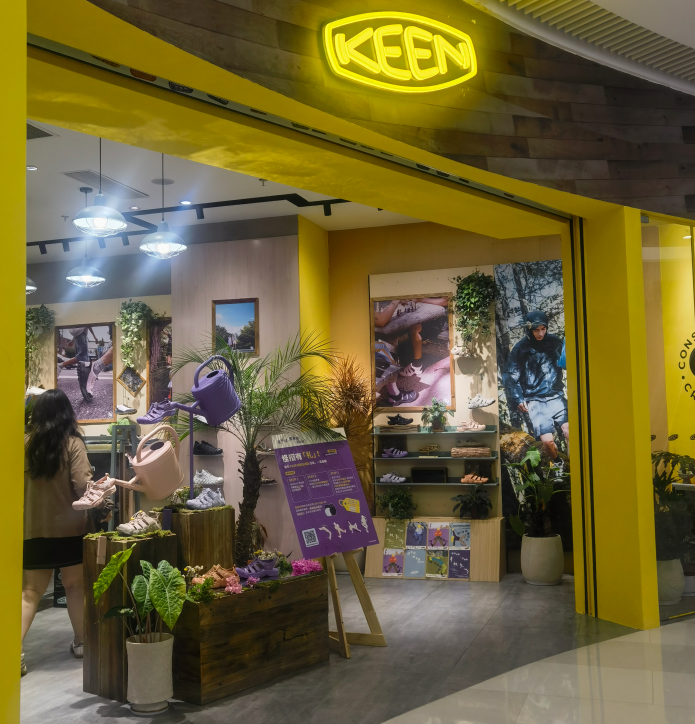
KEEN features raw wood paired with artificial greenery — all-natural materials, zero chemical cost.
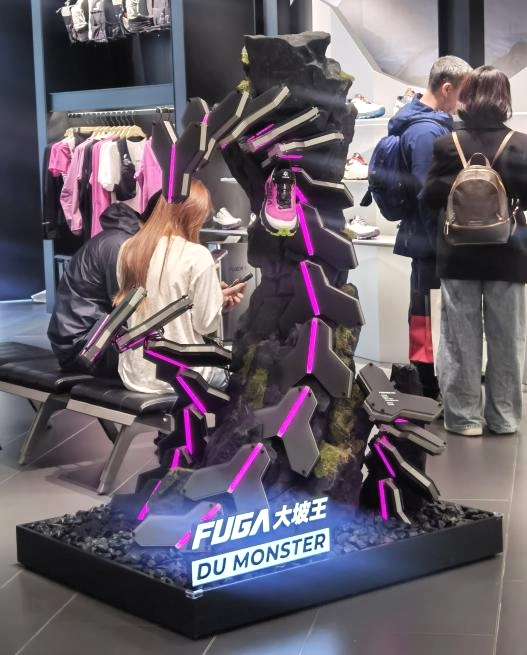
KAILAS uses honed grey stone panels, oxidized aluminum frames, and embedded real gravel as main materials, with roughened edges to heighten the wild feel. Sloped rock platforms at varying heights simulate continuous climbing terrain.
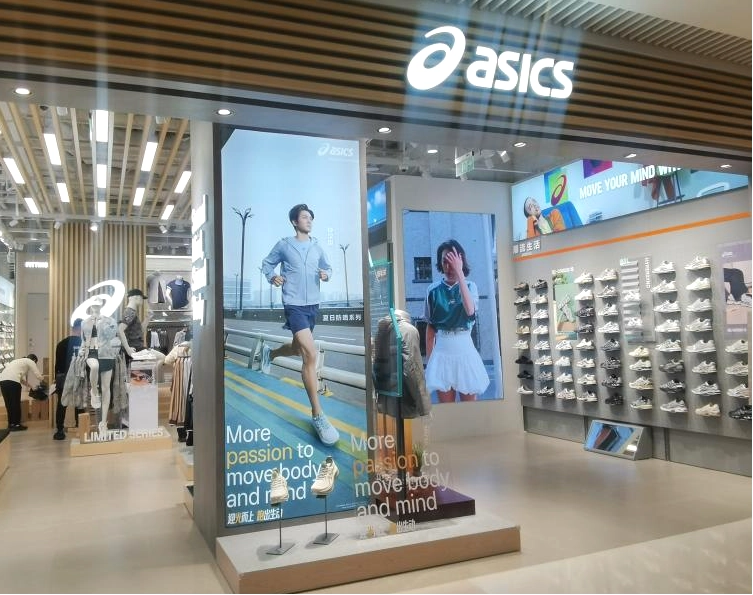
ASICS and KOLON SPORT have virtually no prop displays — advertising takes the form of LED screens and frameless light boxes. Fully digitalized.
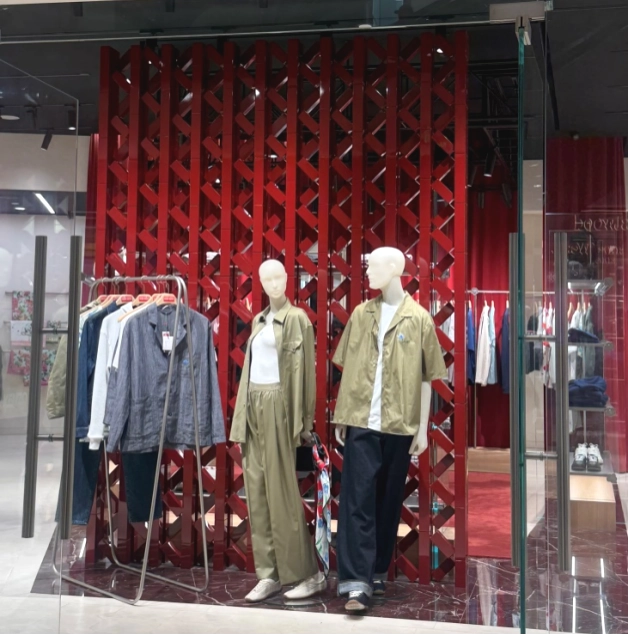
KENZO uses wooden screens with glossy red lacquer — a single prop focused on color, creating strong brand recall.
IT uses carved raw wood paneling for window displays, with LED screens and frameless light boxes for store advertising — a mix of digital and natural.
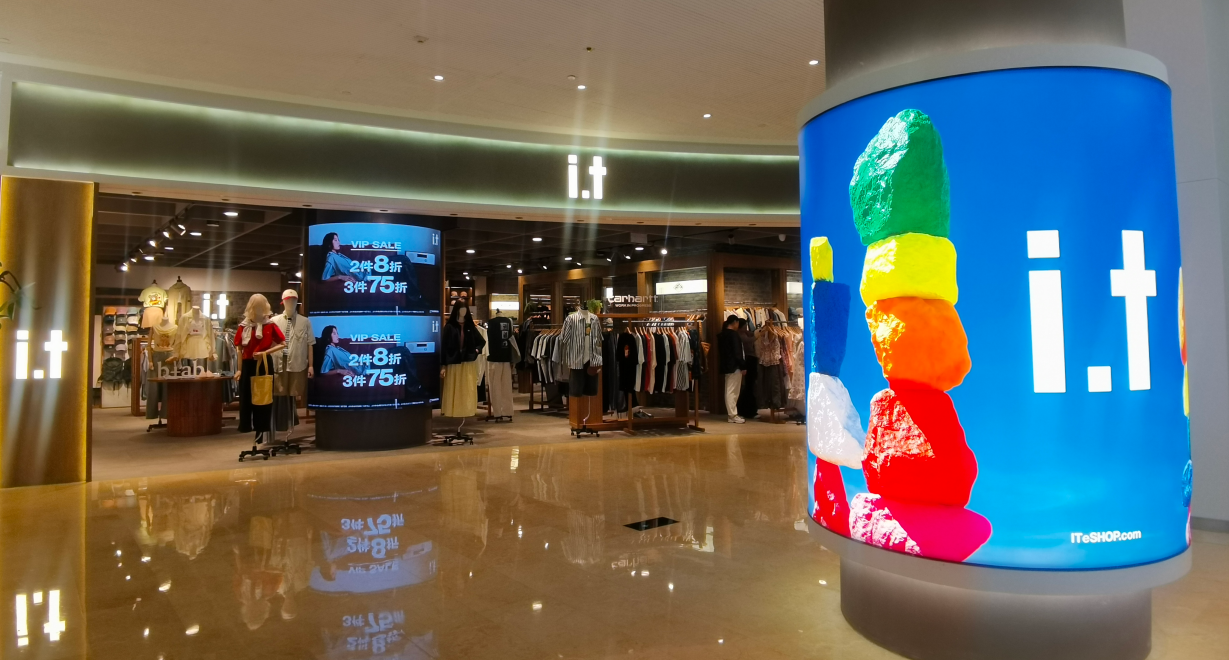
Sportswear is a category where natural storytelling and light digital intervention coexist. Some brands push natural textures to the limit; others use semi-transparent acrylic with dynamic LED to convey a tech-forward feel.
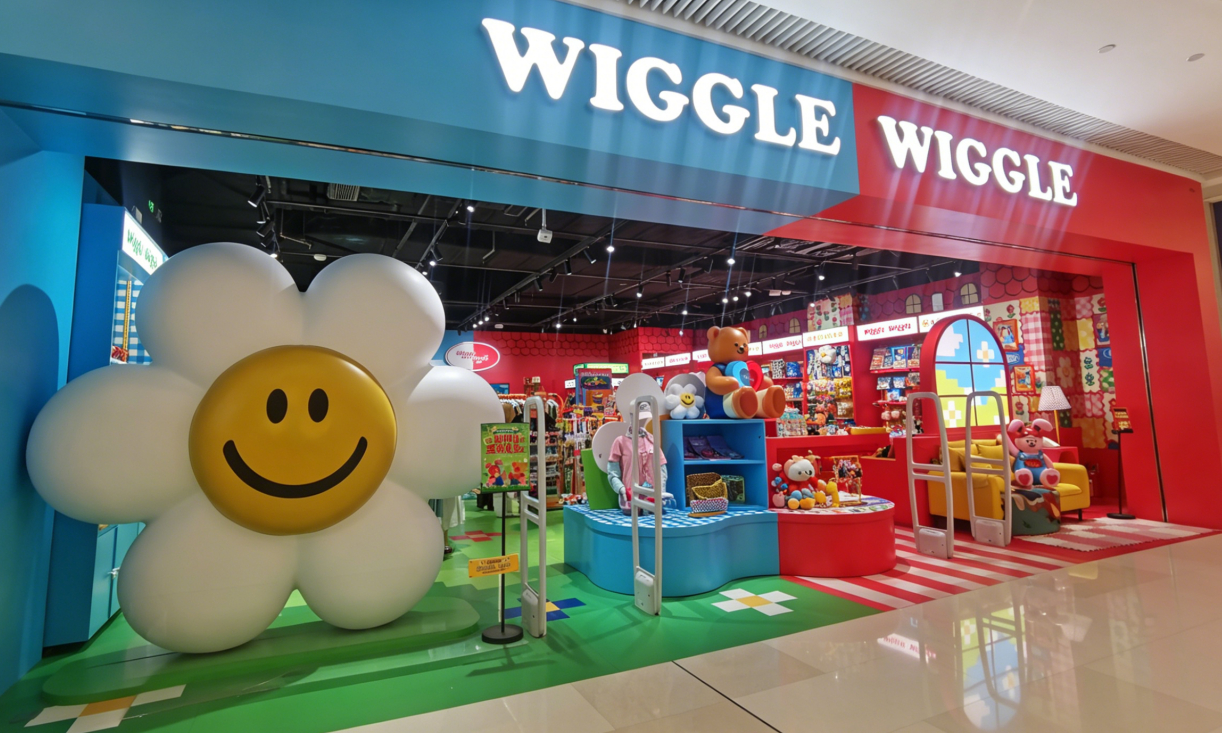
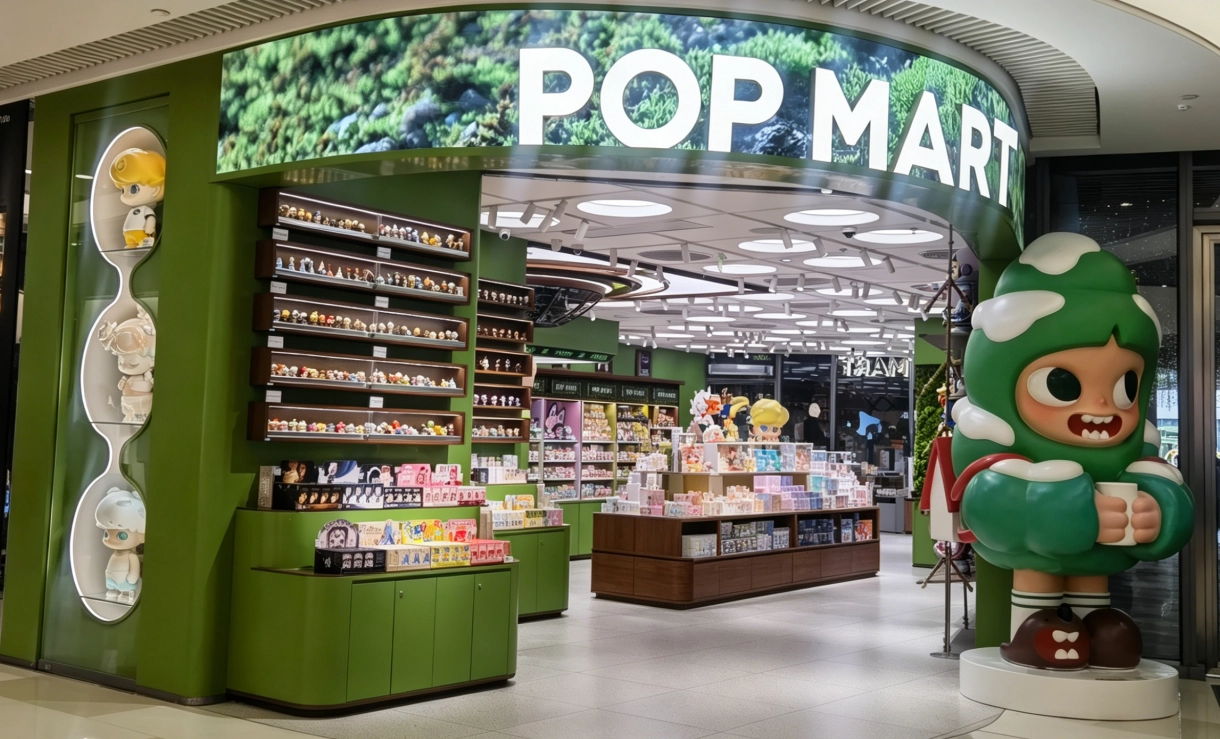
Collectible toys are the only category where neither relaxed minimalism nor natural storytelling applies — rich colors and IP props are the brand's core assets.
Storefronts burst with color, with main displays built around three-dimensional IP figures. In-store advertising uses LED screens, fabric light boxes, and adhesive decals. Small prop display plinths are mainly acrylic and foam board. Printed elements are abundant — creating a contrast with the light-and-airy direction while building a unique visual language for the category.
In spring and summer 2026, while different categories and brands have their own tonal emphasis — artistic restraint and social-driven trends each have their moment — the four trends have reached broad consensus across the industry: relaxed minimalism as the foundation, natural storytelling as the core, sustainable materials as the standard, and light digital intervention as the differentiator. Windows are shifting from selling products to telling lifestyle stories.
Category Characteristics Summary
- Luxury brands: craftsmanship and texture first, simplified and understated, returning to life.
- Beauty brands: fully digitalized, HD LED screens with frameless light boxes.
- Jewelry and watches: texture-driven, material mixing — raw wood with black steel, marble with brass, textured acrylic with gold leaf.
- Sportswear: minimalist and transparent, balancing natural texture with tech, eco-materials as standard.
- Collectible toys: color-rich, 3D IP props as standard, extensive printed elements.
In 2026, under hard resource constraints, brands have found smarter, more efficient ways to express themselves. The best window display is no longer the most expensive one — it's the one that tells the most precise story with the most appropriate resources.
The cases and data in this article are based on field research of brand Spring/Summer 2026 materials and Journal of Retailing and Consumer Services, for industry reference only.
Disclaimer: Due to market environment, regional strategy, and other factors, actual display effects may vary by brand or region. The content presented here serves only the purposes of trend analysis and industry observation, and does not represent the official display positions of the relevant brands.
Four material directions are particularly relevant in 2026: 1.Natural warmth: Raw matte wood, rattan, rough stone, textured stone, cotton and linen. 2.Light and transparency: Semi-transparent organza, specialty paper, frosted acrylic, gradient glass and translucent films. 3.Sustainable materials: Recycled boards, matte recyclable metals, paper and plant-dyed fabrics. 4.Narrative props: Greenery, floral installations and cotton-filled leather figures. An effective retail window display often combines natural textures, transparent materials and reusable components in one coordinated composition. This creates visual depth without making the display feel overcrowded.
Brands can consider five practical options: 1.Recycled boards as alternatives to virgin timber. 2.Matte recyclable metals instead of electroplated components. 3.Paper and plant-dyed fabrics in place of synthetic materials. 4.Biodegradable or lower-impact materials, such as canvas-wrapped display panels. 5.Modular systems that can be dismantled, reconfigured and reused across multiple seasons. For a sustainable retail window display, material selection should begin during the design stage rather than being added as an environmental message afterward. Reusable structures and replaceable graphic panels can reduce waste while preserving a consistent brand appearance.
Four strategies can help control seasonal replacement costs: 1.Use modular structures: Retain the main framework and replace only graphics, surface finishes or selected props. A fabric lightbox and stone-textured display column, for example, can be adapted for different seasonal campaigns. 2.Reuse digital content: LED screen content can be produced once and adapted for multiple stores or campaign periods. 3.Use small-batch 3D printing: Custom forms can be tested and updated without investing in traditional tooling for every design. 4.Select reusable materials: Demountable components can remain in use across several seasons instead of being discarded after one campaign. Based on its visual merchandising production experience, Gimsun recommends planning the reusable structural elements before developing seasonal graphics. This makes each future retail window display easier and more cost-effective to update.
Gimsun recommends three practical approaches: 1.Focus on one hero prop: Instead of filling the entire window, use one strong display stand or sculptural element to communicate the campaign idea. 2.Simplify the material palette: A combination of raw wood, cotton or linen, and greenery can create a natural visual story without requiring complex decorative construction. 3.Use UV-printed finishes: Printed panels can reproduce wood, stone or metal textures at a lower cost and can be updated more easily for future campaigns. Small and mid-sized brands should test a new retail window display concept in one location first. Customer response, product engagement and store traffic can then guide decisions about a larger rollout.