Trend Focus
addtimes:2026-10-10 click:656 author:Gimsun
A Visual Merchandising (VM) window display is far more than "putting products in a window." It's a complete carrier of brand visual communication, spatial storytelling, artistic expression, and consumer experience. It's also the first brand language a customer meets the moment they walk up to a store.
For Fall/Winter 2026, brand windows are shifting in a visible way. Gone is the old obsession with massive installations, elaborate structures, and brute visual impact. More and more brands are moving toward minimalism, scenography, and artistry. They care more about specialty materials, custom display props, 3D printing, surface finishing, and multi-craft integration.
If you're looking for window display solutions — brand window fabrication, bespoke display props, specialty material development — this article gives you both the trend picture and the practical playbook.
A brand window display is the most direct, most essential piece of visual marketing in a commercial space. For luxury and high-end retail brands, a window's job is never just "showing products." It builds a complete brand scene through spatial structure, lighting, materials, color, display logic, and props.
A successful window design usually has to pull off three things at once:
A shopper walking past a storefront lingers for only a few seconds — maybe a dozen at most. The window has to build recognition in that blink of time, so a person feels the brand at a single glance. Common recognition cues include signature brand colors, the logo or brand mark, core product silhouettes, iconic patterns or motifs, a specific architectural language, an art style, specialty materials and surface texture, and festive or seasonal themes.
A great window rarely starts with "which props to place." It starts with a complete Window Display Concept. You can draw inspiration from architecture, royal courts, nature, Eastern culture, art installations, travel, festivals, or product craftsmanship — then build one unified visual theme.
A creative concept only lives if materials and craft bring it to earth. Prop design and fabrication are where concept meets reality. Backdrops, plinths, display tables, irregular structures, large sculptures, interactive installations — all of it counts as window display props. A strong supplier doesn't just "make props." They truly understand the design concept and deliver something installable, shippable, and maintainable.
Judging by recent high-end commercial spaces and luxury brand windows, FW26 window displays are showing four clear trends.
Minimalism isn't simplification. For FW26, a wave of high-end brands is paring back the visual elements inside the window. More negative space, restrained color, clearer structural relationships. The focus lands hard on the core product and installation. The shift means windows no longer lean on piling up elements. Every single prop has to carry more weight in texture. Material, proportion, edge treatment, and lighting detail all become critical. "Less but better" becomes the core of high-end visual expression. At the fabrication level, refinement and finish matter far more than prop count.
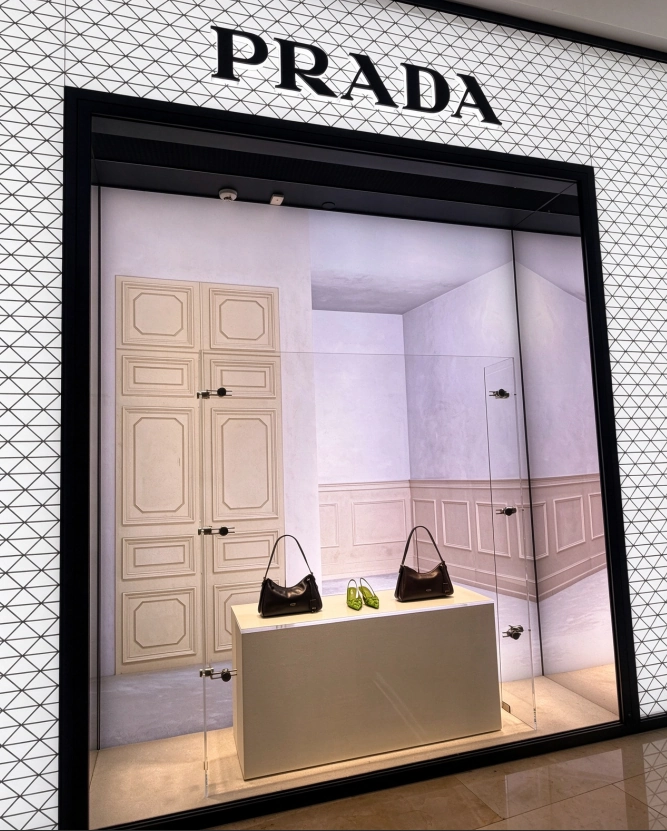
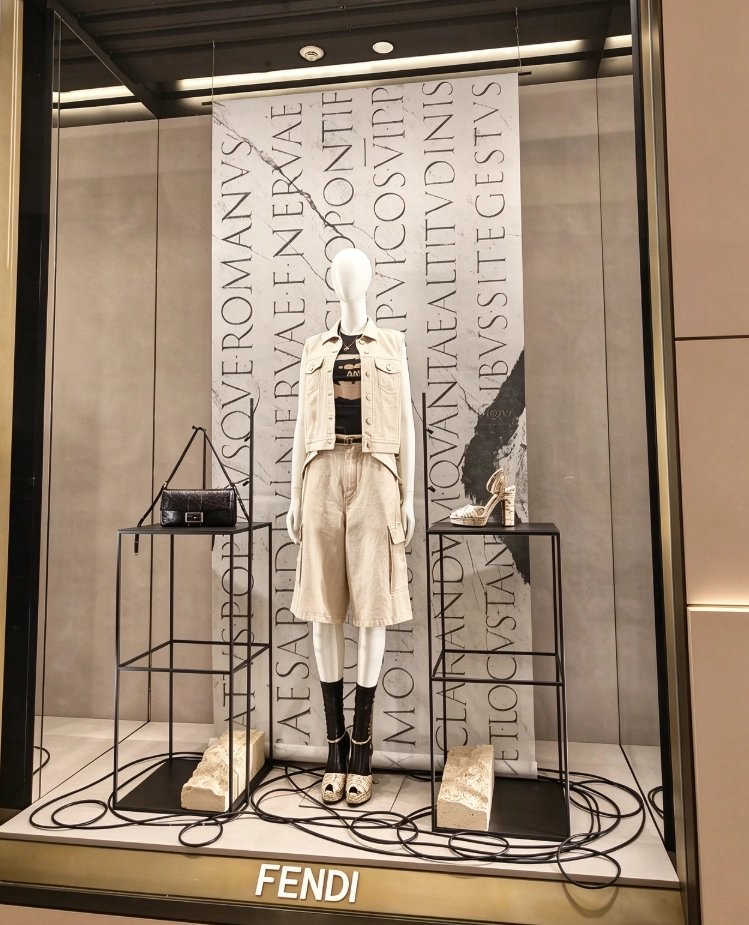
Windows are upgrading from plain product display into a vehicle for scenographic storytelling. Today's window works like a miniature stage. Display walls, arch structures, geometric frames, layered platforms, transparent display cubes, suspended installations, material zoning — together they build a complete visual atmosphere. The logic boils down to one line: product + display props + spatial structure = scenographic brand expression. Going forward, commercial display props won't be limited to traditional display cases, tables, or plinths. They'll participate deeply in building the scene, becoming part of the brand's story.
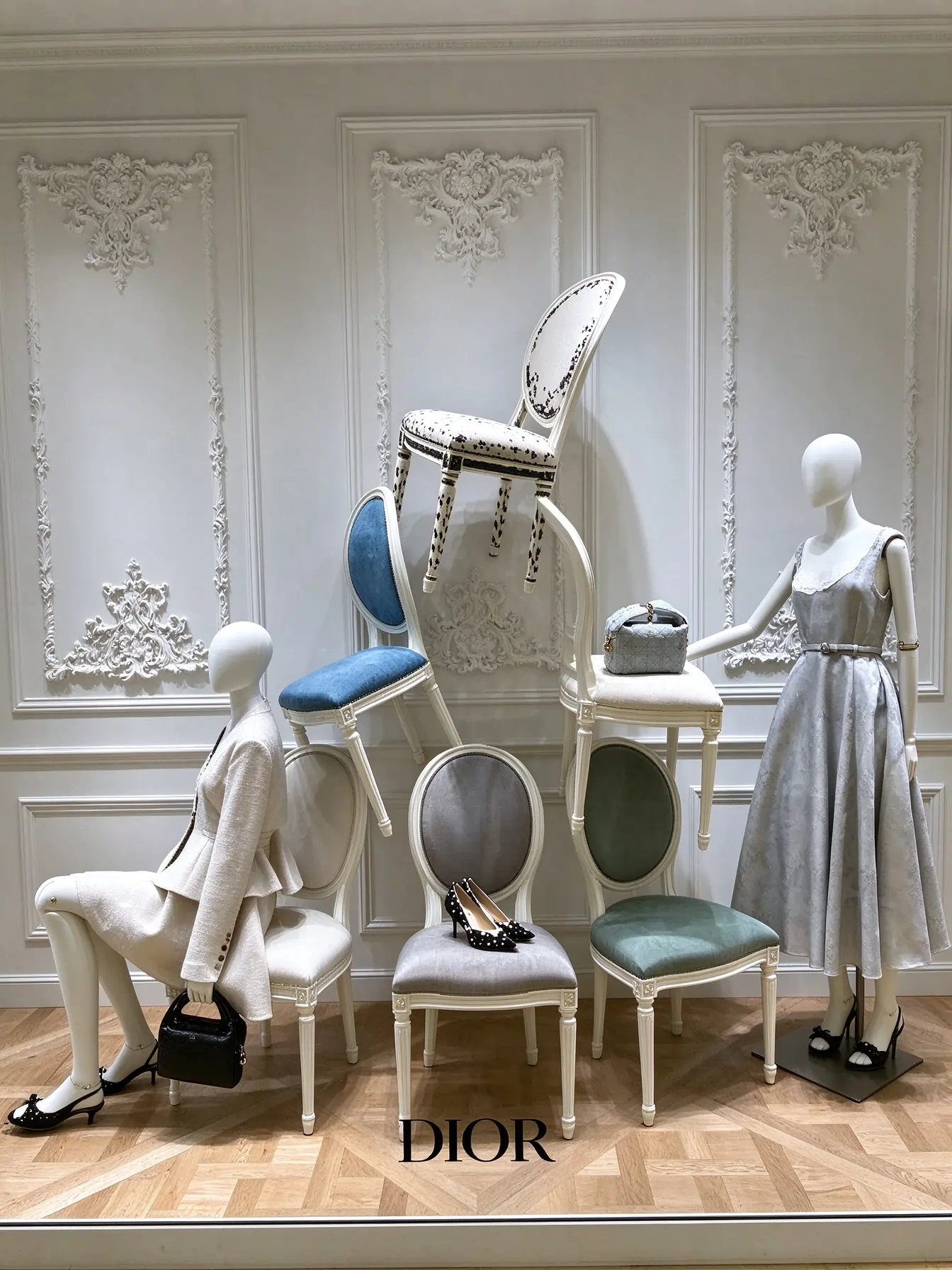
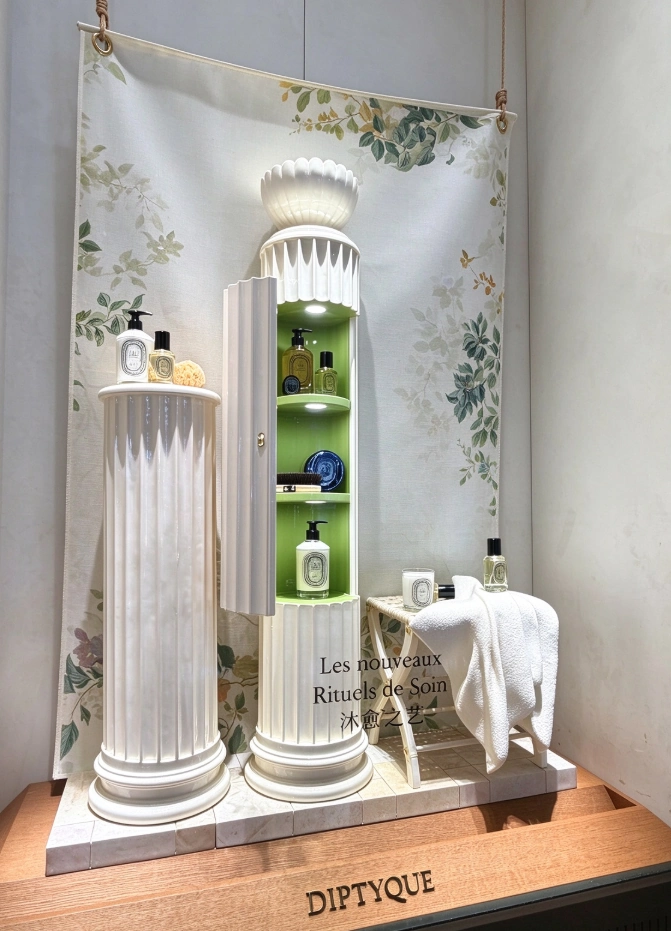
Luxury brands keep amplifying the artistic value of their windows. A window isn't just a sales tool. It's a visual communication medium between the brand and the consumer. More window designs are borrowing the language of installation art: large sculptures, abstract forms, handcrafted components, light-and-shadow installations, structural repetition, exaggerated proportions. This raises the bar for window prop suppliers. A supplier needs more than fabrication skill — they have to read everything a designer asks for: proportion, structure, material, color, surface texture, and installation method.
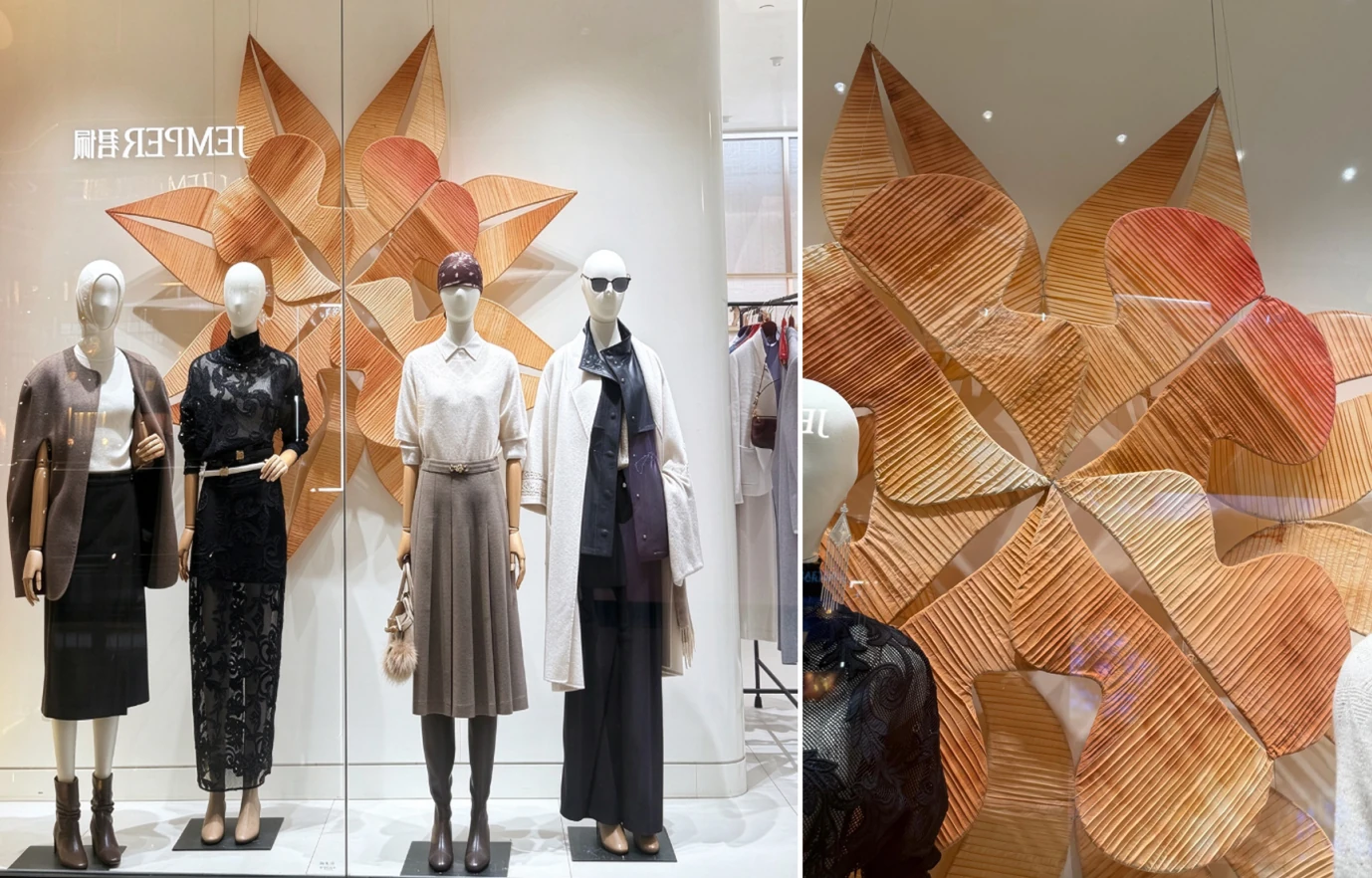
Windows aren't simply choosing expensive natural materials. They lean on specialty processes, surface finishing, and material combinations to create a one-of-a-kind visual and tactile experience. For window fabricators, specialty material development and surface-process innovation will become a real competitive moat. Take Cartier's autumn window: it pairs a shell-textured material with a gold-and-silver color clash, fusing specialty materials and craft into a highly recognizable display.
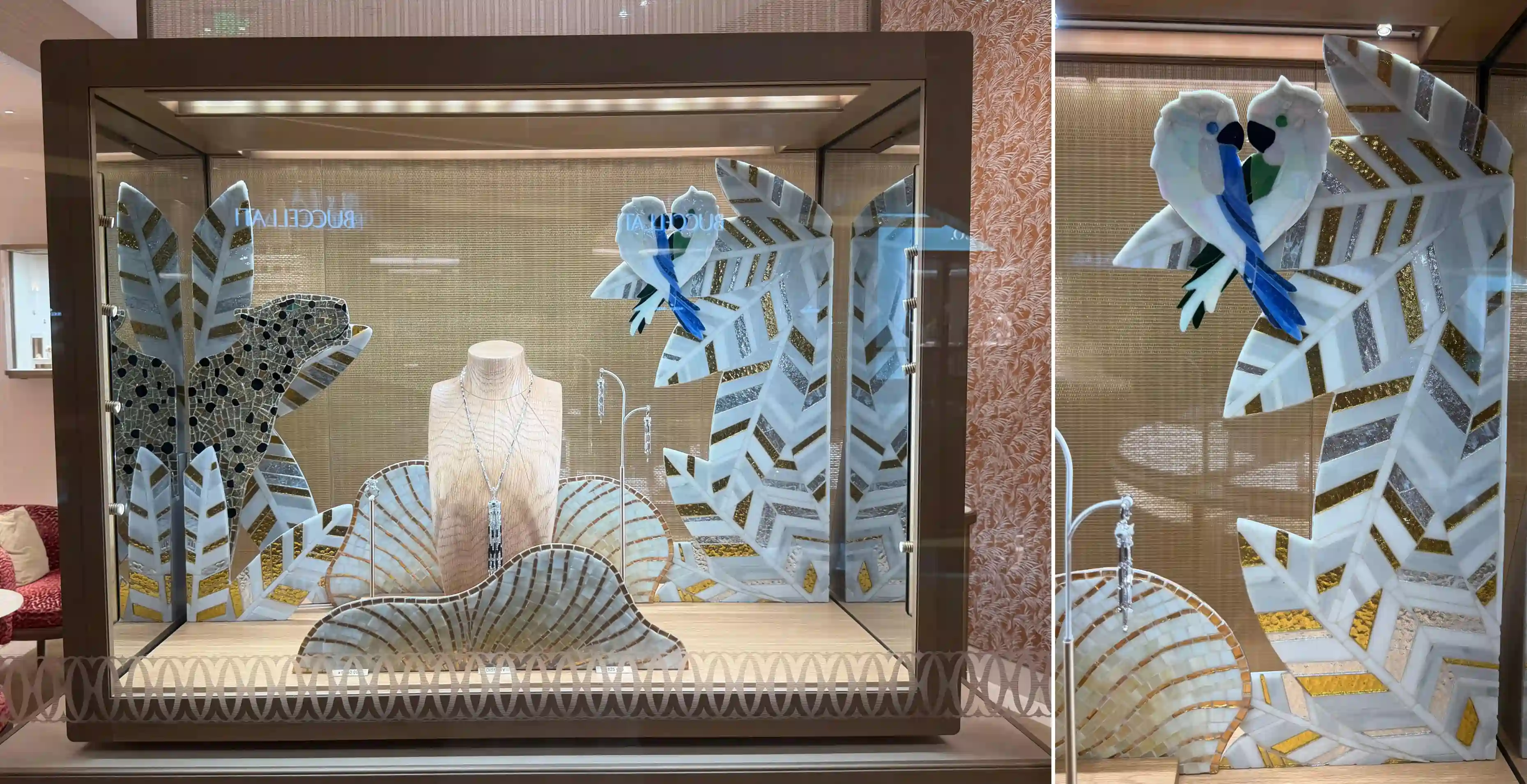
Windows increasingly emphasize a material's own texture, layering, and touch — not just flat imagery. Common textured finishes include stone texture, micro-cement effects, sandstone effects, wood-grain surfaces, oxidized metal effects, matte metal finishes, woven textures, fabric textures, and faux leather. These materials work on backdrop walls, display tables, packaging-style installations, brand visual logos, and scenographic window props. Miu Miu's autumn 2026 window uses a textured material on the floor, highlighting material detail and a pursuit of tactility.
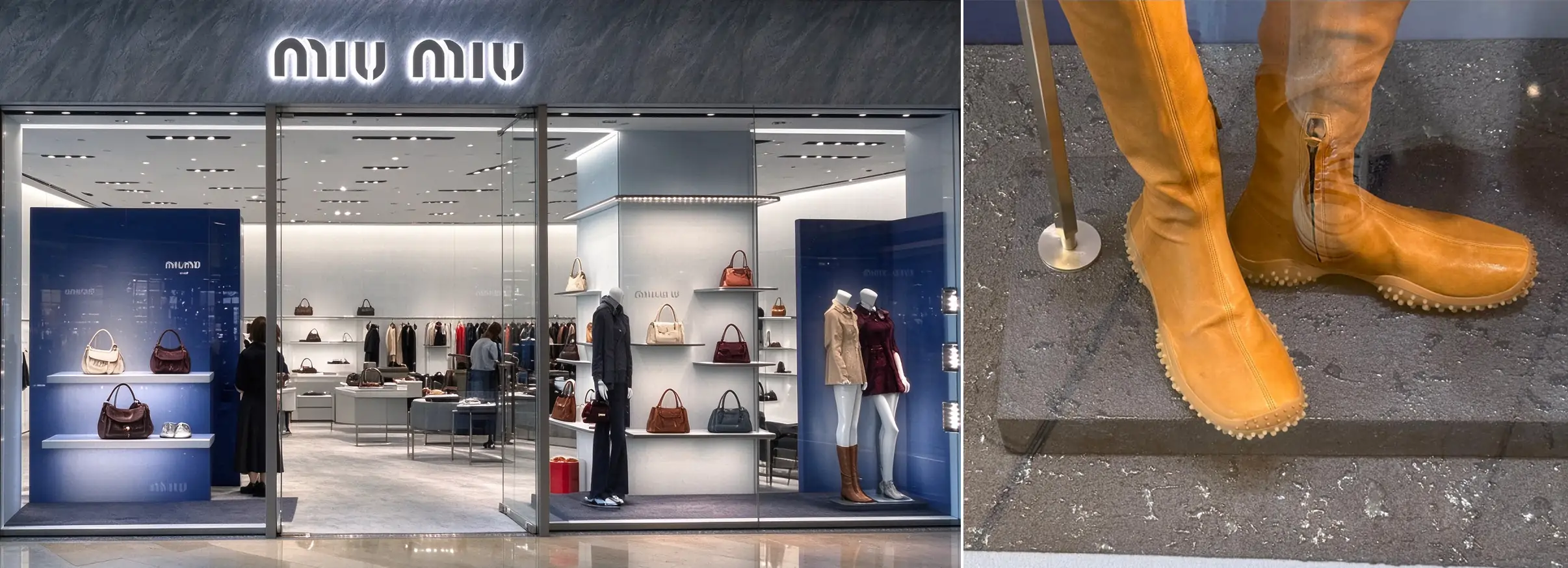
Traditional UV printing mostly outputs flat images. With specialty inks and multi-layer printing, it can now produce three-dimensional texture. The advantages: fast sampling, ideal for small-batch custom work, layering of different textures, and controllable cost. It's used mostly on backdrop panels, decorative panels, and display table surfaces. In a brand window, UV relief can make an ordinary board read as a premium material.
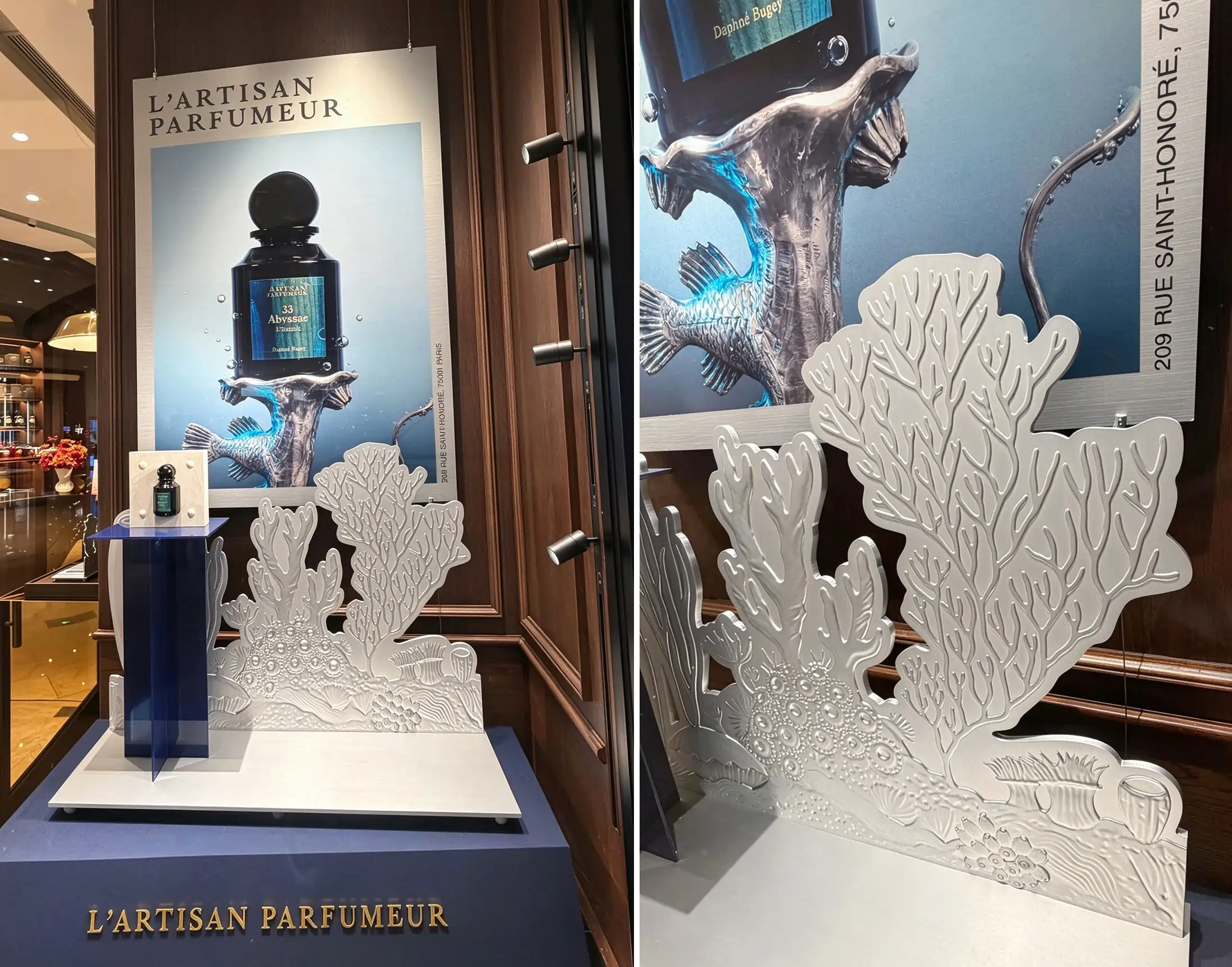
3D printing is especially suited to small-batch custom work, complex curves, irregular structures, and sculptural installations. It also enables rapid prototyping and design validation. For luxury brand windows, the biggest value of 3D printing is cutting the loss between a design drawing and a physical sample — letting complex ideas hit the floor fast.
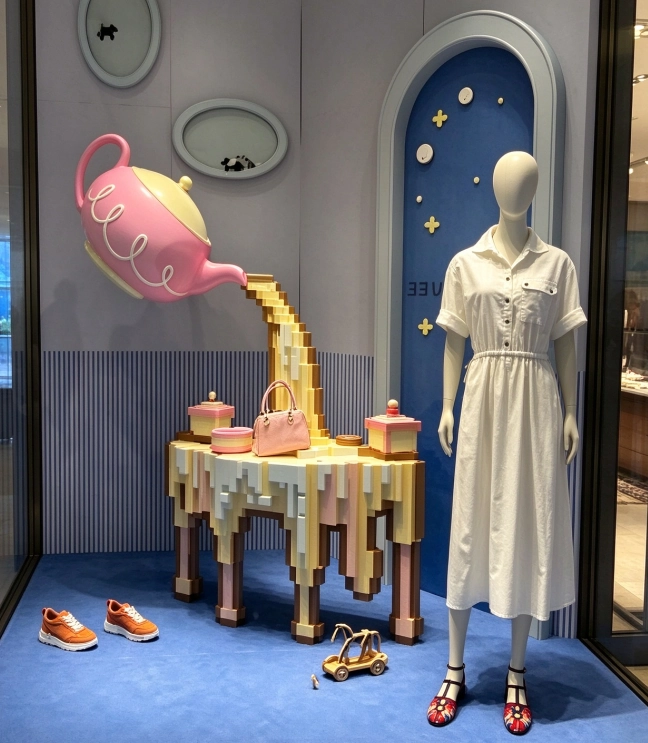
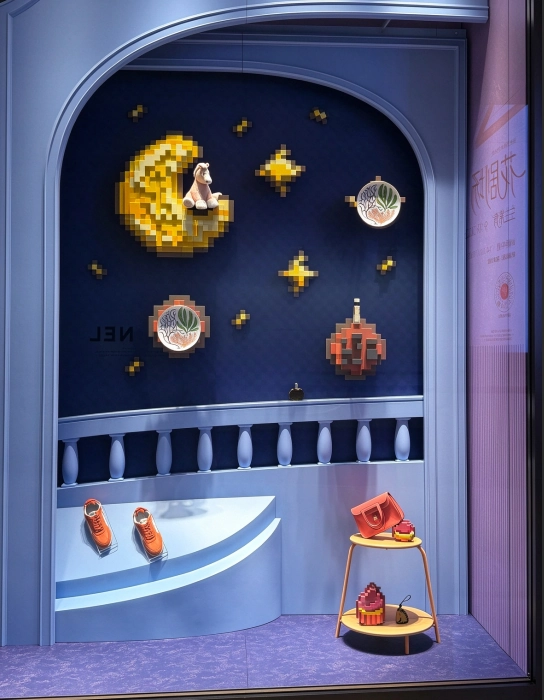
Fiberglass has long been a core material for large window installations — especially large sculptures, architectural structures, irregular display tables, and art installations. It's highly formable and offers great sculptural freedom, satisfying big-scale, high-impact brand display needs.
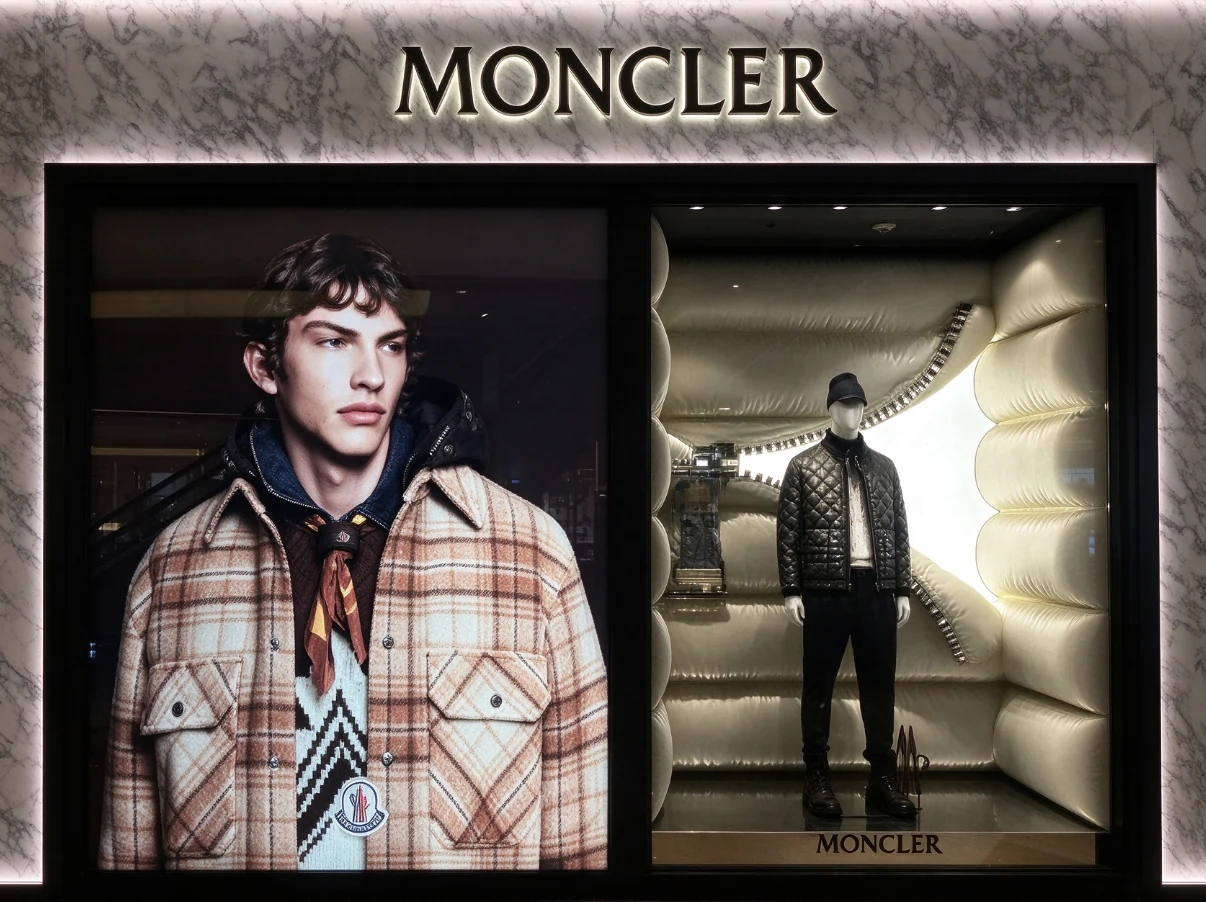
Moncler's FW26 window keeps its long-standing preference for fiberglass craft. A one-piece fiberglass structure faithfully reproduces the shape of a down jacket and its zipper. The overall effect still turns heads.
As window design shifts from traditional display to spatial installation, the prop category keeps expanding.
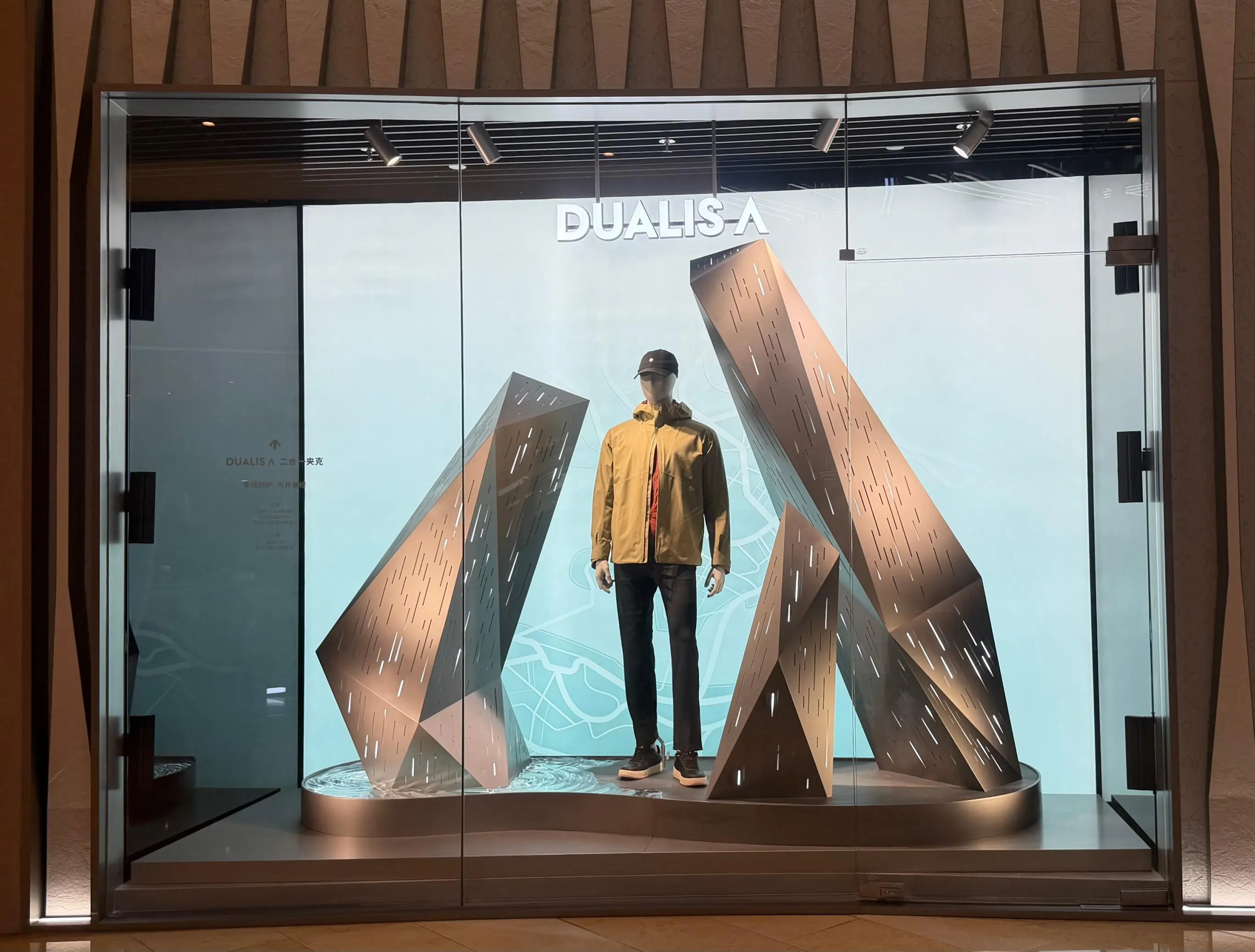
Irregular props suit projects chasing artistry, high recognition, and brand personality. Common forms include irregular display tables, sculptures, art installations, curved backdrops, irregular structures, geometric modules, and suspended structures. They usually combine woodworking, MDF, acrylic, fiberglass, resin, metalworking, and 3D printing into one multi-craft build.
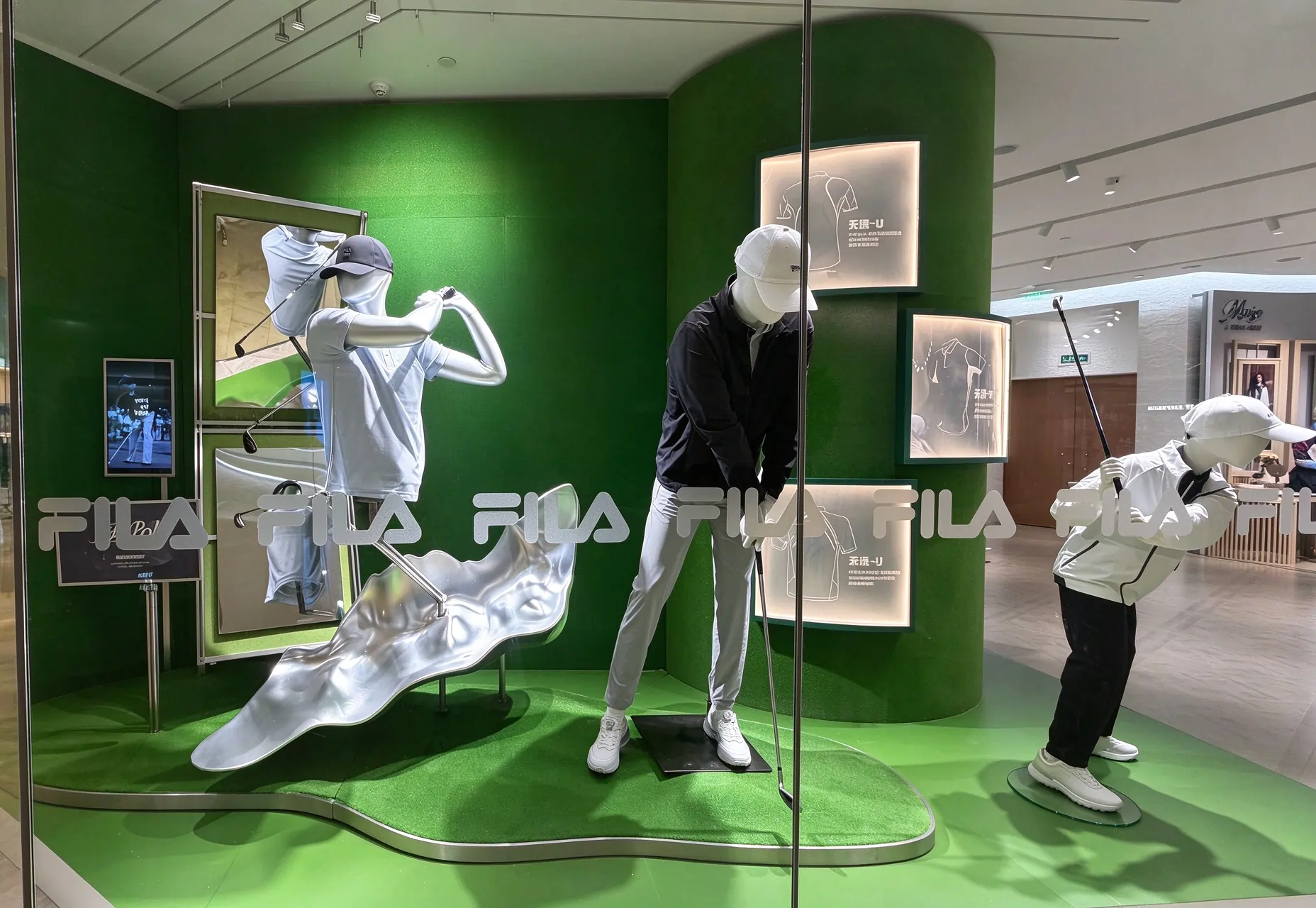
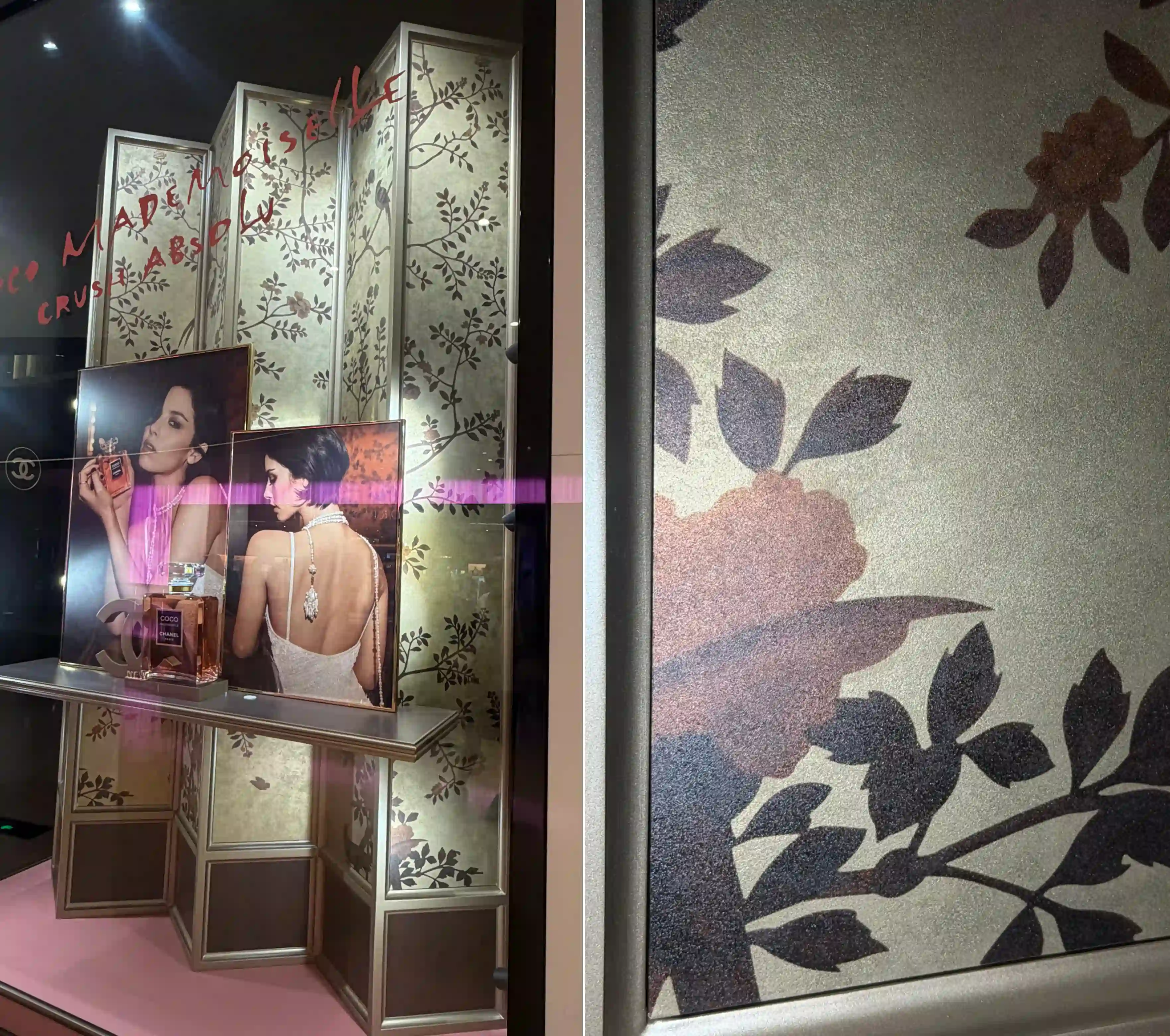
Textured props are a direction worth watching closely. More brands are moving from "pattern expression" to "material expression." Applications include stone texture, cement texture, wood-grain texture, oxidized metal effects, fabric texture, relief texture, and all kinds of faux-natural surfaces.
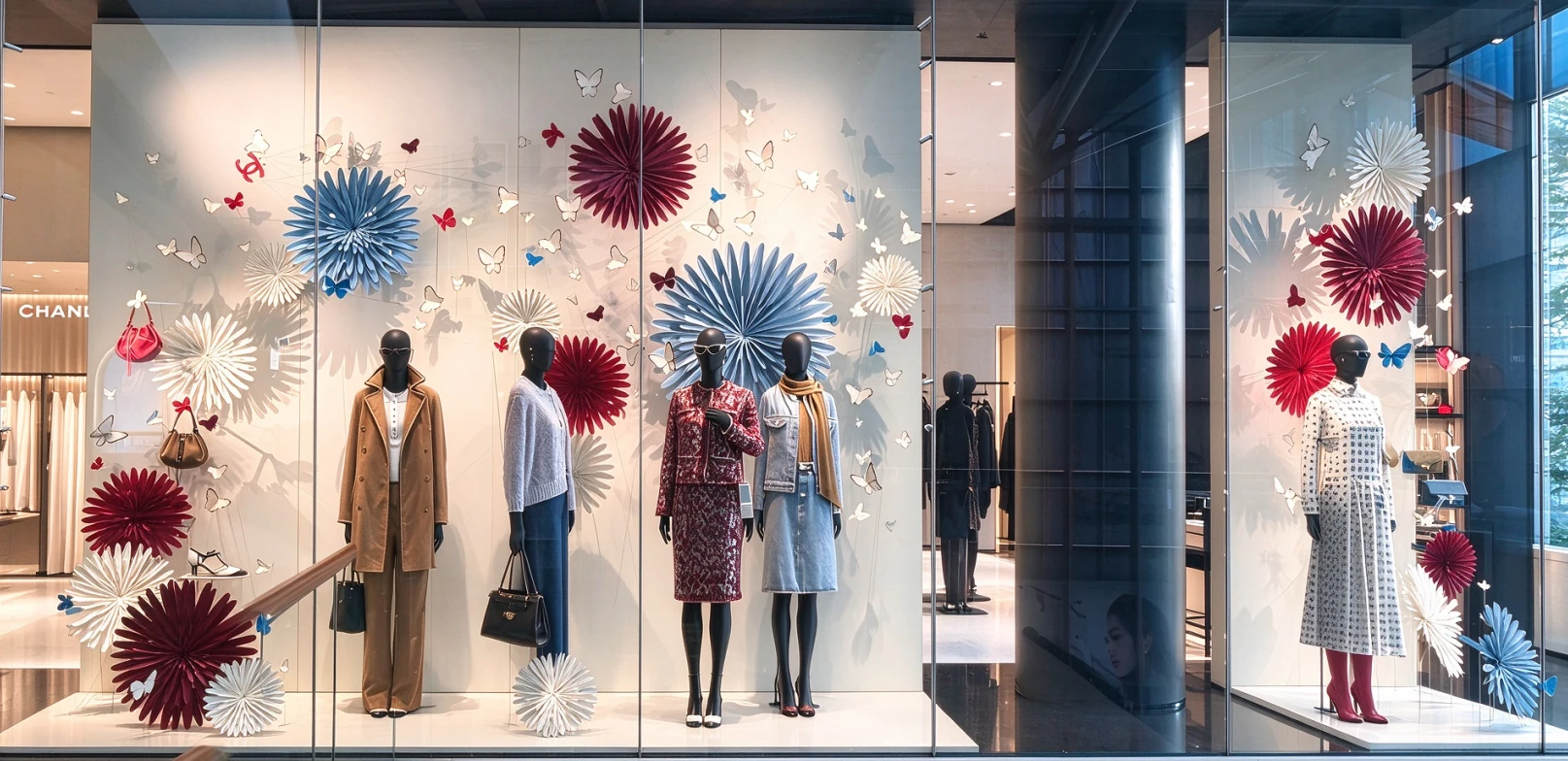
Eco-friendly props are today's hot window solution for brands putting sustainability into practice. Paper art, fabric, eco-inks, and other green materials and processes deliver visual appeal alongside a low-carbon mindset. The props are lightweight, easy to assemble and recycle, ideal for short-run pop-up windows and seasonal theme displays — helping brands carry their ESG value.
For future window projects, a supplier can't survive on basic fabrication alone. They need end-to-end capability, from concept to installation.
This demands sharp market insight, a feel for new materials, and continuous exploration — uncovering new applications across novel panels, specialty coatings, textured materials, fabric, faux materials, and specialty printing effects.
Luxury brand windows are almost always highly customized. So instead of large-scale standardized production, suppliers need stronger small-batch, irregular-shape custom production capability.
A single window prop can involve woodworking, metal, acrylic, UV printing, 3D printing, spraying, and surface finishing all at once. A supplier who can integrate multiple crafts holds a bigger edge in complex projects.
A supplier can't just quote on dimensions. More and more brand projects require a supplier who reads the full picture: design concept, material effects, color, proportion, lighting, transport, installation, disassembly, and reuse. This is the future core competency of the high-end commercial display supply chain.
FW26 window displays officially step into a new phase: design concept + material innovation + custom craft. More brands are building their visual expression through minimalism, scenography, artistry, or specialty materials. The window has already upgraded from traditional product display into part of the brand's spatial experience.
For brands and design teams hunting for window display solutions, the ideal supplier reads the brand's design language, applies specialty materials, fabricates custom props, and integrates multiple crafts. GIMSUN, as a one-stop visual merchandising service provider, focuses on window and custom prop delivery, insisting on material innovation and custom prop R&D — and that's where the future of commercial visual display is heading.
Case studies and data are based on on-site research of each brand's FW26 materials and retail channel monitoring. For industry reference only.
Disclaimer: due to market conditions and regional strategies, actual display results may vary by brand and region. The content presented here serves trend analysis and industry observation purposes only and does not represent the official display positions of the brands mentioned.
FW26 windows move toward minimalism, scenography, artistry, and material tactility. Brands use premium textured materials, minimalist structures, immersive scenes, and art installations to lift the sense of quality — placing even more weight on material craft and prop refinement.
Modern windows are shifting from "flat visuals" to "tactile experience." Stone, micro-cement, oxidized metal, fabric, and wood-grain textures give a window depth and premium detail, making a static display feel richer and more lasting — the mainstream upgrade path for luxury brands.
Three main types: irregular artistic props, textured props, and eco-friendly props. You can tailor them to the brand's character using 3D printing, fiberglass, metal, UV relief, fabric, paper art, and more.
Eco window props mainly use paper art, fabric, eco-inks, and low-carbon printing processes. They're lightweight, easy to assemble, and recyclable — perfect for pop-up windows and seasonal themes that match a brand's sustainable visual goals.
3D printing is ideal for complex curves, irregular structures, small art sculptures, fine details, and small-batch creative props. It enables rapid prototyping and design validation, dramatically shortening the time from concept to installation.
Fiberglass is extremely formable and offers high sculptural freedom. It suits large window installations, big sculptures, architectural structures, and one-piece irregular display tables — a core material for high-end, large-scale window projects.
A high-end window supplier needs more than fabrication. They need new-material R&D, multi-craft integration, small-batch customization, design-concept comprehension, and full-process delivery (including installation, disassembly, and reuse).
It covers concept realization, specialty material application, texture-process fabrication, custom irregular props, 3D printing / fiberglass molding, multi-craft integration, on-site installation, and after-sales. GIMSUN provides full-chain, high-end custom window delivery.